



At the moment, there are no entries available for display



Managing Natural Capital Responsibly
At DFCC Bank, we understand that climate change and natural resource depletion are shaping the future of our economy and the communities we serve. Although our direct environmental impact is limited, we remain committed to adopting sustainable operational practices and transparently reporting our progress. Aligned with regulatory expectations and stakeholder priorities, we continue to pursue initiatives that reduce our environmental footprint while enabling environmentally responsible financing. Through these efforts, we aim to contribute meaningfully to a low carbon transition and demonstrate leadership in environmental stewardship within the financial sector.
Natural Capital: How it supports DFCC BANK's Strategy
Linkage to Key Strategic Pillars of DFCC BANK's Strategy
Customer-Centric Excellence
By integrating environmental considerations to offer green and sustainable
financial products,
the Bank strengthens trust among environmentally conscious customers while enhancing long-term
value.
Strategic Growth and Market Expansion
By understanding environmental trends and emerging markets, DFCC Bank drives
towards achieving
growth through green financing, climate-resilient lending, renewable energy portfolios and
sustainability-linked financial products, which support businesses transitioning to low carbon
models.
Digital Innovation and Transformation
By transitioning to paperless operations and digital customer journeys, DFCC
Bank reduces
resource use while offering convenient and efficient services.
Operational Efficiency and Agility
Sustainable resource use such as energy efficiency, reduced paper
consumption and responsible
waste management support DFCC Bank’s drive for efficient and agile operations.
Empowered Talent and Culture
Embedding environmental responsibility within DFCC Bank’s culture empowers
employees to
champion green banking practices and sustainable decision making.
Sustainable Impact and Governance
Natural capital is central to DFCC Bank’s ESG commitments, driving
responsible financing,
climate-risk assessments and alignment with SLFRS S2. Through environmental stewardship and
transparent reporting, the Bank strengthens stakeholder trust and ensures long-term sustainable
value creation.
SWOT Analysis for Social and Relationship Capital
S
Strengths
- Strong commitment to sustainable financing
- Enhanced transparency through alignment with SLFRS S2
- Increasing adoption of paperless and energy-efficient operational practices
- Being GCF accredited entity – First bank in Sri Lanka
to achieve this status
O
Opportunities
- Rising demand for green and sustainable finance
- Availability of global climate funds and sustainability partnerships
- Ability to embed stricter environmental standards across the supply chain
W
Weaknesses
- Limited real-time environmental performance and impact tracking across branches
- Dependence on external energy sources; limited room for expansion of renewable and green building integration into the Bank’s business model
- Limited awareness and practice among clients
on climate-related disclosures and requirements
to be fulfilled
T
Threats
- Increasing climate-related physical risks affecting borrowers and asset quality
- Regulatory tightening on environmental compliance and reporting standards
- Competitive pressure from banks and financial institutions with aggressive green/sustainable financing portfolios
- Extreme weather events affecting community well-being and business continuity
Linkage to SDGs


Strategic Context: Why Natural Capital Matters to DFCC bank
Natural capital refers to the stock of natural resources and ecosystems such as air, water, soil, forests, biodiversity, and ecosystem processes that provide essential benefits to society and support economic activity. DFCC Bank recognises natural capital as a material sustainability-related factor that influences the Bank’s ability to create and sustain value over the short, medium, and long term.
As a financial institution, DFCC Bank’s exposure to natural capital arises primarily through its financing and investment activities, as well as through its own operations. Dependencies and impacts related to natural capital can include credit risk, portfolio performance, operational resilience, and the financial viability of clients. These factors are therefore integral to the Bank’s assessment of risks and opportunities. The evolving regulatory requirements, market expectations, and increasing physical and transition risks linked to environmental degradation have further heightened the financial relevance of natural capital consideration.
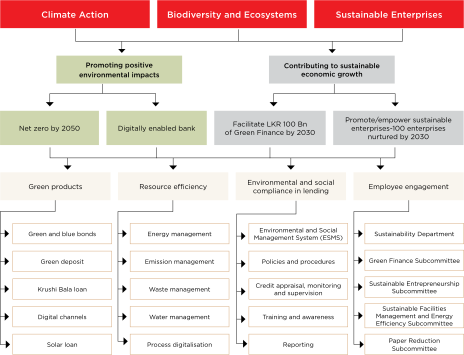
Accordingly, DFCC Bank does not treat natural capital as a standalone sustainability theme. Instead, it is recognised as a key driver of long-term portfolio quality, sustainable growth, and the resilience of communities and value chains supported by the Bank. Natural capital considerations are embedded within the Bank’s Environmental and Social Management System (ESMS), product structuring and approval processes, and the broader Sustainability Framework. This includes the integration of new themes such as climate action, sustainable enterprises and biodiversity and ecosystems, ensuring that the Bank’s financial intermediation contributes to environmental stewardship while supporting economic resilience.
DFCC Bank’s approach towards Natural Capital Management and Environmental Sustainability
GRI
203-1
203-2
DFCC Bank actively aligns its practices with sector-specific sustainability standards and stakeholder expectations, regularly updating its policies and strategies. With 70-years of providing sustainable financial solutions, the Bank remains committed to advancing low-carbon, environmentally responsible financing. As a pioneer signatory to the Sri Lanka Banks Association (SLBA)’s Sustainable Banking Principles (SBP), DFCC Bank continues to embed sustainability at the core of its banking operations. The Bank also supports inclusive growth by balancing economic performance with environmental stewardship, social responsibility, and strong governance.
The Bank has established a long-term net-zero emissions target by 2050, aligned with the goals of the Paris Agreement, as part of its approach to managing climate-related risks and opportunities. In 2025, DFCC Bank engaged with the Partnership for Carbon Accounting Financials (PCAF) to quantify financed emissions within its lending portfolio, strengthening data availability and methodological rigour in preparation for reporting under SLFRS S1 and SLFRS S2.
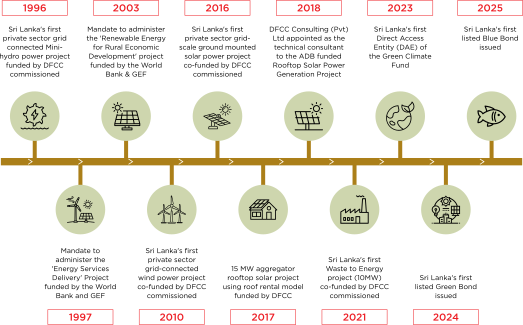
Our pioneering Green Finance journey
Best practices during the year to manage the environmental footprint of the Bank
| Support Climate Action | Promote Green Finance |
| Partnership with PCAF | Issuance of DFCC Bank’s Blue Bond |
| Obtained membership of the UNGC | Formulation of an ESG Risk Policy |
| Initiated the groundwork for the Bank’s Net Zero Roadmap by making an initial draft |
Latest updates incorporated to the ESMS and ESG Policy |
| Regular awareness and training on key environmental topics, implementation of policies and processes | Green finance compliant loans tagged in core banking system, in addition to the classification of gender, sustainable enterprises and social enterprises |
| Increasing the ATM/CRM footprint | Securing funding for renewable energy financing from Symbiotics |
| Mandate digitalisation | Launch of a targeted facility for the Climate-Smart Agriculture segment under the Krushi Bala loan scheme |
| Moving into e-business signatures for external documentation | Launch of special EV leasing solutions for retail customers |
| Partnerships with electric vehicle suppliers for value chain financing | |
| Continued internal fund allocation for renewable energy loans, and enhancements to existing solar loan product |
Sustainable Green Finance
Green finance is a core component of the Bank’s sustainability strategy and is embedded across its long-term sustainability objectives and near-term strategic priorities. As at year end, the Bank’s sustainable green finance portfolio stood at LKR 19,350 Mn, representing pure SLGFT compliant lending, and comprising primarily of financing for renewable energy, sustainable water and wastewater management, and initiatives supporting access to finance in developing markets.
Green Financing Portfolio Share By Business Unit
Sector Wise Distribution of the SLGFT Compliant Green Financing Portfolio
In response to the evolving sustainable finance landscape, the Bank continues to enhance its frameworks to maintain alignment with emerging global standards, taxonomies, and best practices. This includes ongoing refinement of the internal sustainability data dictionary, product definitions, qualifying financial instruments, and the strengthening of related policies, governance arrangements, and reporting processes.
Through targeted initiatives, including dedicated allocations for renewable energy financing and the provision of concessionary funding, the Bank supports environmentally sustainable projects that contribute to resource efficiency, climate resilience, and long-term value creation, while facilitating measurable environmental and social outcomes.
Cumulative Capacity Addition to Renewable Energy
2025 Highlight: Mobilising Capital for Nature-Positive Outcomes
DFCC Bank advanced Sri Lanka’s sustainable finance market in 2025 by mobilising capital for renewable energy and for the sustainable blue economy, demonstrating how financial intermediation can support the protection and regeneration of natural capital while enabling inclusive growth.
Green Deposit
Introduced two years ago as Sri Lanka’s first dedicated green deposit product, the DFCC Green Deposit is an innovative fixed-deposit solution that channels customer funds into environmentally sustainable investments and supports national climate-mitigation priorities. All proceeds are allocated exclusively to projects that comply with the SLGFT, and the associated loan portfolio has been independently reviewed and validated by external auditors, ensuring transparency and the responsible deployment of green financing.

Green Climate Fund
The Green Climate Fund (GCF) is a financial mechanism established in 2010 under the United Nations Framework Convention on Climate Change (UNFCCC). Its primary purpose is to support developing countries in raising and realising their Nationally Determined Contributions (NDCs) towards low-emissions and climate-resilient pathways. The GCF is a critical element of the Paris Agreement, aimed at facilitating a paradigm shift in the global response to climate change. It is the world's largest climate fund, providing financial assistance for projects, programmes, and policies that address climate change challenges. The National Designated Authority (NDA) of the GCF in Sri Lanka is the Ministry of Environment.In July 2023, DFCC Bank became the first Sri Lankan entity to obtain accreditation of the GCF and is also the only Sri Lankan entity with GCF accreditation. At present, DFCC Bank has developed and submitted a Project Concept Note to obtain GCF financing for the fisheries sector, titled "Climate resilient fisheries in Sri Lanka", in close collaboration with the Food and Agriculture Organization (FAO) of the United Nations.
Natural capital risk management: strengthening safeguards and accountability
Natural capital risks can crystallise as credit risk (e.g., drought-related yield losses), operational risk (e.g., flood disruption), compliance risk (e.g. evolving regulations and taxonomy expectations), and reputational risk (e.g. financing activities that degrade ecosystems). DFCC Bank’s management response is to embed safeguards and decision tools early in the credit lifecycle such as screening, due diligence, approval, and monitoring, so that natural-capital risks are identified, managed, and where possible transformed into opportunities.
Environmental and Social Management System
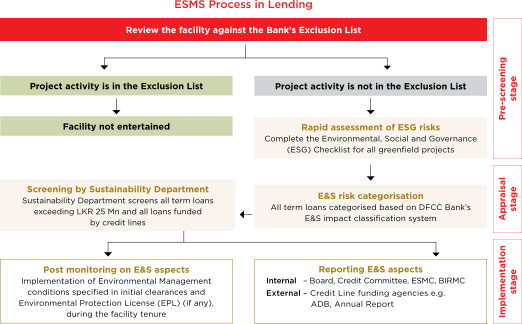
DFCC Bank’s Environmental and Social Management System (ESMS), provides the framework for identifying, assessing, and managing environmental and social (E&S) risks associated with the Bank’s financing activities. In 2025, the Bank continued to strengthen and operationalise its ESMS, focusing on embedding E&S risk management into day-to-day credit processes. Building on the system’s initial introduction in 2016 and subsequent enhancements, the Bank prioritised clearer role delineation, targeted staff training, and introduced structured ESG scorecards to support consistent assessment and documentation.
The Bank’s ESMS has evolved in line with international best practices, with major revisions undertaken in 2021 and 2023 to align with all International Finance Corporation (IFC) Performance Standards on Environmental and Social Sustainability. A further revision was completed in 2025 to strengthen alignment with regulatory expectations and stakeholder requirements.
The Sustainability Department is responsible for the implementation and continuously enhancing the ESMS. Its mandate includes E&S risk assessment, due diligence, monitoring throughout the loan tenure, and capacity-building initiatives to embed E&S compliance across the organisation. Given the nature of DFCC Bank’s business, the Bank’s most significant E&S impacts are indirect and arise primarily through the projects and activities it finances.
As part of its due diligence process, all term loans exceeding LKR 25 Mn are screened by the Sustainability Department to ensure compliance with applicable environmental laws and regulations. Facilities are assessed and categorised using the Bank’s internal E&S risk categorisation framework, which determines the scope of due diligence and monitoring requirements during the life of the facility.
The Sustainability Department also reviews and monitors loans granted under externally funded credit lines, including those supported by institutions such as the Asian Development Bank (ADB), acting as the designated environmental screener for such facilities.
To enhance transparency, data quality, and reporting capabilities, the loan appraisal formats were further revised to capture detailed facility-level E&S data. Enhancements to the core banking system now enable systematic capture of this information, supporting improved future disclosures.
In addition to risk controls, the ESMS is designed to promote responsible business practices among clients by encouraging greater awareness of environmental and social impacts and the adoption of appropriate mitigation measures. Risks identified at appraisal and monitoring stages are addressed through conditions precedent, covenants, and ongoing engagement led by Credit Units and the Sustainability Department.
Key Esms Measures Implemented
- Mandatory completion of the Environmental, Social and Governance (ESG) checklist for all term loans exceeding LKR 25 Mn
- Strengthening the environmental safeguards clause on E&S requirements in the letter of offer, which is currently positioned within the general conditions
- E&S risk categorisation of all relevant facilities at the appraisal stage
- Comments and recommendations from the Sustainability Department on E&S aspects pertaining to credit appraisals
- Ongoing monitoring of E&S compliance throughout the loan tenure
- Regular internal reporting to governance committees, including the Credit Committee, Asset and Liability Management Committee, Executive Sustainability Management Committee (ESMC), Board Integrated Risk Management Committee (BIRMC) and external reporting to the Central Bank of Sri Lanka and development finance institutions
- Site visits by the Sustainability Department to ensure E&S compliance of Bank funded projects and projects under consideration for funding
- Maintenance and periodic review of the Bank’s lending exclusion list
- Integration of ESG considerations into broader banking operations and decision-making processes
Given below is a summary of the E&S Risk Categorisations carried out for all term loans exceeding LKR 25 Mn as at 31 December 2025.
| Category | Number of loans |
| Very High Impact (A) | 18 |
| High Impact (B) | 61 |
| Medium Impact (C) | 49 |
| Low Impact (D) | 32 |
| Very Low Impact (E) | 169 |
| 329 |
Natural Capital Risk Management: Strengthening Safeguards and Accountability
Natural capital considerations are deeply integrated into the Bank’s ESG Risk Management approach, recognising that ecosystem degradation, biodiversity loss, and climate-related physical events can transmit into traditional financial risks through impacts on borrowers, collateral values, and broader economic activity. Under the Bank’s ESG Risk Policy and Integrated Risk Management Framework, natural capital risks are assessed as cross-cutting drivers that influence credit, operational, liquidity, compliance, and reputational risk exposures—particularly within climate-sensitive sectors dependent on natural ecosystems. These risks may manifest in various forms, such as drought-related yield losses affecting agricultural borrowers, flood impacts disrupting supply chains, or the necessity of navigating evolving environmental regulations and taxonomies.
To manage these exposures, DFCC Bank utilises structured safeguards embedded across the entire credit lifecycle, encompassing screening, due diligence, approval, and monitoring. Central to this process is the ESMS, which functions as a decision-support framework for proportionate, risk-based evaluation. By embedding environmental and social screening into appraisal formats and monitoring protocols, the Bank enhances traceability, consistency, and auditability across credit decisions. Furthermore, risk categorisation, stress testing, and portfolio monitoring processes incorporate natural capital dependencies and vulnerabilities to assess how ecosystem disruption may affect long-term value creation.
The ultimate objective of this integrated approach is to identify and mitigate environmental and social risks early, while supporting customers in strengthening their own resilience. By aligning financing decisions with environmental stewardship and responsible banking principles, the Bank ensures its portfolio remains resilient against emerging threats. A more detailed explanation of the Bank's governance, risk methodologies, scenario analysis, and monitoring mechanisms is provided in the Integrated Risk Management section of this Annual Report (Page 239).
Disclosure Readiness and SLFRS S1 & S2: Moving from Narrative to Decision-Useful Information
In 2025, DFCC Bank advanced disclosure in response to the evolving sustainability reporting landscape. With SLFRS S1 and S2 focusing stakeholder expectations around governance, strategy, risk management and metrics/targets, DFCC Bank continued to strengthen the systems needed to capture consistent, decision-useful information on sustainability-related risks and opportunities, including those connected to natural capital and climate.
A key focus during the year was improving the quality of qualitative disclosures while including quantitative reporting as applicable. Enhanced ESG scorecards, clearer screening and monitoring steps, and strengthened governance processes support a more complete ‘line of sight’ from policy to portfolio decisions—an essential requirement for credible sustainability disclosures.
The Bank recognises that high-quality disclosure depends not only on narrative articulation but also on robust underlying data systems and governance processes. Accordingly, these enhancements focus on expanding coverage, improving methodological consistency and strengthening internal validation mechanisms.
Looking Ahead: Management Priorities for 2026 and Beyond
Management’s forward agenda is to further embed the natural-capital lens across the portfolio and operations by:
- Expanding green/blue financing pathways aligned to national priorities and applicable taxonomies.
- Further strengthening ESMS implementation through calibrated thresholds, streamlined tools, and risk-based reviews.
- Enhancing impact reporting on sustainable finance instruments through clearer project-level indicators and assurance-ready documentation.
- Continuing staff capability development and embedding ESG scorecards into performance and portfolio monitoring dashboards.
- Progressively improving SLFRS S1/S2-aligned disclosures by increasing coverage and consistency of underlying data and controls.
Special Focus on Impact of Cyclone Ditwah on Natural Capital and the Bank
Cyclone Ditwah showed how closely natural ecosystems and financial stability are linked. When nature is disturbed or under stress, events such as heavy rainfall, flooding and landslides can become more severe, affecting communities, infrastructure and businesses that the Bank finances. These impacts created financial pressure on borrowers and led to higher expected credit losses, proving that disruptions to natural systems can directly affect asset quality and cash flows. The cyclone also highlighted why the Bank must include natural capital and physical climate risks in its assessments, stress tests and portfolio monitoring. By improving its governance and risk management after Ditwah, the Bank is strengthening its ability to identify and manage nature-related and climate-related risks, while supporting economic activities that rely on healthy ecosystems.
Responsible consumption of natural resources
As a financial services institution, DFCC Bank’s direct consumption of natural resources is significantly lower than that of resource-intensive sectors. Nevertheless, the Bank acknowledges its responsibility to manage its environmental footprint and contribute to sustainable development.
Sustainability considerations are integrated across the Bank’s operations, including lending practices, internal processes, customer engagement, and digital transformation initiatives designed to enhance operational efficiency.
 Energy Management
Energy consumption remains the primary source of the Bank’s carbon footprint, with grid electricity accounting for the largest share. In response, energy management has been identified as a strategic priority. The Bank monitors electricity and fuel consumption on a monthly basis to ensure effective oversight and continuous improvement.
Governance of energy efficiency initiatives is overseen by the Sustainable Facilities Management & Energy Efficiency Sub Committee, in collaboration with the Sustainability, Real Estate, and Logistics Departments. Key focus areas include lighting, cooling systems, office equipment, and transportation, with limited integration of renewable energy through rooftop solar installations. Through ongoing monitoring and the adoption of environmentally responsible practices, DFCC Bank remains committed to minimising the use of finite resources and reducing its operational carbon footprint.
GRI
302-1
302-2
302-3
302-4
Key actions taken during the year to ensure energy efficiency:
| Key Focus Area | Key Actions During the Year | |
 |
Energy Efficiency | Continued replacement of fluorescent lighting with LED alternatives and upgrade to energy-efficient inverter air-conditioning systems during branch refurbishments. Efficient use of natural day light, and use of light-reflecting colours on walls and furniture for new work spaces. |
 |
Energy Management Controls | Standardised air-conditioning temperature settings; operation at 100% capacity during customer hours and approximately 60% during non-customer hours; use of timers and sensor switches to control energy usage. |
 |
Renewable Energy | Installation of rooftop solar photovoltaic systems at five business locations, reducing grid electricity consumption and emissions. The initiative has reduced reliance on grid electricity by 7%, strengthening the Bank’s efforts to lower its operational carbon footprint and improve energy resilience. |
 |
Governance and Oversight | Monitoring of energy management initiatives through the Sustainable Facilities Management & Energy Efficiency Subcommittee, with progress updates to the Executive Sustainability Management Committee. |
 |
Awareness and Behavioural Change | Staff awareness programmes to encourage responsible energy consumption and efficient workplace practices. |
 |
Long-Term Direction | Commencement of the development of a Net Zero Roadmap aligned with the Bank’s ESG Strategy and national climate commitments. |
Renewable energy generation/savings through solar power as at 31 December 2025
| DFCC Bank | |||||||
| Location | Installation month/year |
System Capacity (kWp) |
Solar power generation (kWh) | Savings (LKR) | |||
| 2025 | 2024 | 2025 | 2024 | ||||
| Negombo | June 2017 | 27.00 | 34,398 | 39,745 | 1,334,632 | 1,921,745 | |
| Ramanayake Mawatha | June 2017 | 36.40 | 44,315 | 46,679 | 1,719,425 | 2,250,996 | |
| Kurunegala | October 2021 | 50.00 | 66,684 | 77,760 | 2,587,333 | 3,724,222 | |
| Head Office – Colombo | November 2023 | 150.15 | 167,992 | 202,673 | 6,518,103 | 9,827,631 | |
| Borella | April 2024 | 40.00 | 63,562 | 38,169 | 2,466,209 | 1,699,988 | |
| 376,951 | 405,026 | 14,625,702 | 19,424,582 | ||||
Energy highlights for DFCC Bank – 2025
| Electricity consumption | 6,353,539 kWh | 22,873 GJ |
| Energy intensity ratios – Electricity consumption per employee | 2,541 kWh | 9.149 GJ |
| Reduction in electricity consumption – Solar power generation | 376,951 kWh | 1,357 GJ |
| Energy consumption (non-renewable sources) | ||
| – Fuel for Company-owned vehicles (Diesel) | 46,532 liters | 1,796 GJ |
| – Fuel Company-owned vehicles (Petrol) | 43,214 liters | 1,478 GJ |
| – Fuel for Standby generators (Diesel) | 28,973 liters | 1,118 GJ |
| Heating consumption | No | No |
| Cooling consumption | No | No |
| Steam consumption | No | No |
| Energy consumption outside the organisation |
Not applicable | |
| Energy consumption within the organisation |
27,265 GJ | |
Standards, methodologies, assumptions, and/or calculation tools used – None
Conversion factors used:
Electricity 1 kWh = 0.0036 GJ
Diesel 1 litre = 0.0386 GJ
Petrol 1 litre = 0.0342 GJ

 Water Management
Water management forms an integral part of DFCC Bank’s resource efficiency. The Bank’s water requirements are primarily met through pipe-borne water supplied by the National Water Supply and Drainage Board and local authorities and are used exclusively for administrative and office purposes.
To safeguard employee and customer wellbeing, the Bank has installed water filtration systems to provide safe drinking water across all five main buildings and approximately 86% of the branch network. DFCC Bank monitors water usage across its operations and has implemented conservation initiatives such as sensor-based fixtures and efficient filtration systems.
The importance of responsible water use is continually reinforced through employee engagement and internal communication platforms, supporting the Bank’s objective of reducing environmental impact through prudent resource management. Furthermore, in line with the DFCC Blue Bond focus on water stewardship, a staff competition was held during the year to promote awareness on water consumption, conservation and lending activities.
Water consumption for DFCC Bank as at 31 December 2025
|
Water Consumption |
49,134 m3 |
|
Intensity ratio (per employee) |
Approx. 20 m3 |

 Waste Management
The Bank has implemented a structured 7R-based waste management framework to support its transition towards a net zero pathway and to improve resource efficiency across operations. The approach focuses on reducing waste generation at source while promoting responsible resource use, reuse, recycling, and recovery of materials in line with circular economy principles.
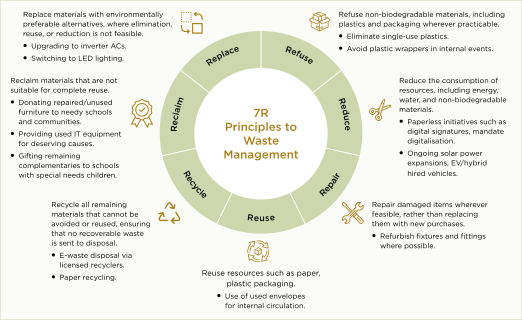
Solid waste management practices are applied consistently across the Bank, with waste segregation at source embedded as a standard operational requirement. Systems and facilities have been provided at branch and head-office locations to enable the classification and segregation of paper, food, plastic, glass, and electronic waste. Waste reduction through minimised consumption remains a key priority, supported by responsible use and disposal practices. Recycling activities are carried out in collaboration with authorised third-party service providers.
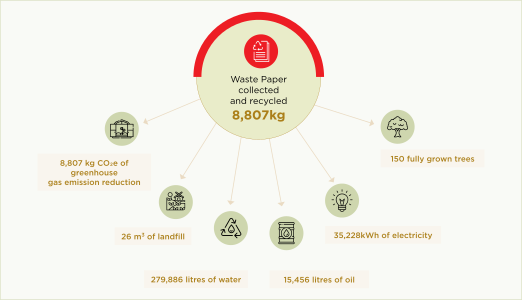
Paper waste generated by the Bank consists primarily of cardboard and expired documents. Paper waste is segregated at source based on confidentiality requirements. Documents classified as confidential are shredded on-site under the supervision of an authorised Bank officer prior to recycling. Shredded paper and non-confidential paper waste are transferred to approved recycling partners, including Neptune Recyclers, to ensure environmentally responsible recycling.
Savings from waste paper recycling as at 31 December 2025
Electronic waste generated from banking operations is usually collected and disposed of through registered and licensed e-waste handlers. This process is designed to ensure compliance with applicable environmental regulations and to prevent inappropriate disposal of hazardous materials. However as a result of intensive repair and re-use of existing equipment, during the year there was no e-waste generated by the Bank.
Organic waste, mainly generated through employee activities, is managed through established disposal channels. Such waste is primarily disposed off using the services of relevant local authorities. Where feasible, food waste is diverted for agricultural use through farm-based arrangements, supporting waste diversion from landfill.
Promoting Paperless Operations
In line with DFCC Bank’s sustainability objectives and operational efficiency priorities, continued progress was recorded during 2025 in reducing paper usage and expanding the adoption of digital processes. A series of initiatives were implemented to limit dependence on physical documentation and to support the Bank’s transition towards a paper-light operating environment. These measures were undertaken with the dual objective of lowering environmental impact and improving cost efficiency.
Through the implementation of these initiatives, sustainability considerations continue to be integrated into the Bank’s operational framework. Digital solutions and improved resource management practices have contributed to a gradual reduction in the Bank’s paper footprint. However, certain regulatory obligations and established banking procedures continue to require the use of physical documentation, constraining a full transition to a completely paperless operating model. Ongoing digital transformation initiatives are expected to further enhance the Bank’s paper reduction efforts and strengthen process efficiencies. GRI
305-1
305-2
305-3
305-4
305-5
305-6
306-7
Key actions taken during the year to reduce paper consumption:
| Key Focus Area | Key Actions During the Year |
| e-business card |
Reducing the need for traditional paper based business cards |
| Digital signatures | Streamlining external document authentication and reduced reliance on physical signatures |
| Utilising printer codes |
Implemented enhanced tracking mechanisms including assigning a unique print code to each employee to monitor and manage print volumes effectively |
| Paper usage dashboard | A branch and department-wise paper usage dashboard circulated periodically, highlighting excessive users and to optimise usage and reduce waste |
| Mandate digitalisation | Digitalisation and printing carried out on a need only basis |
| Digital letterheads | Addressing the high network demand and cutting traditional printing costs |
| Digital request forms | Physical request forms were phased out and replaced with digital versions to improve efficiency and reduce paper use |
| Integration of operational supplies into O2 System |
All stationery, café items, cleaning supplies, and basic medical products were fully integrated into the O2 system, with managers being provided dashboard access to monitor consumption and drive cost-efficient usage |
| Branch notices | Branch notices in digital form only |

 Emissions Management
DFCC Bank measures and manages its greenhouse gas (GHG) emissions in accordance with recognised international standards to support climate-related risk management and disclosure. The emissions inventory includes a comprehensive coverage of the Bank’s operations.
The annual GHG inventory was prepared in accordance with the Greenhouse Gas (GHG) Protocol and ISO 14064-1:2018 standards, with the assessment conducted in collaboration with RR Associates (Pvt) Ltd. Independent verification was obtained from the Sri Lanka Climate Fund, an accredited verifier, providing assurance over the accuracy and reliability of the reported emissions data.
Emissions are calculated annually to determine the Bank’s carbon footprint for the financial year, covering direct emissions and indirect emissions. The 2025 assessment did not identify any significant air emissions, ozone-depleting substances, pollutants, or other hazardous emissions arising from the Bank’s operations. Please refer to the page 194 of SLFRS sustainability related financial disclosures and page 516 of notes to the GRI index for more details on emission figures and related disclosures.
GHG emissions summary for DFCC Bank
| Emission Intensity (per employee) | 1.205 tCO2e |
| Scope | Emission in tCO2e | ||
| 2025 | 2024 reported |
2024 recalculated |
|
| Scope 1 – Direct GHG emissions* | 516.622 | 594.110 | 495.623 |
| Scope 2 – Indirect GHG emissions** | 2,494.250 | 2,675.060 | 2,609.406 |
| Remarks | |||
|
* Scope 1 emissions: This variation is mainly associated with changes |
|||
|
** Scope 2 emissions: show a marginal variation between 2024 and 2025, reflecting
relatively stable electricity consumption patterns across branches. No significant structural or
operational change is observed |
|||
|
Scope 3 emissions: We are in the process of computing financed emissions; therefore, we will disclose Scope 3 emissions in a future reporting period. No emission reductions were reported during the year. |
|||
GHG emission of DFCC Bank PLC by source and the type of GHG
Assessment Type: Organisational Greenhouse Gas Assessment, using Financial Control approach*
Boundary: DFCC Bank PLC**
Compliance: Greenhouse Gas Protocol – a corporate accounting and reporting standard
Reporting period: 1 January 2025 to 31 December 2025
| Scope | Emission sources | GHG emission | Total GHG emission |
|||
| CO2 | CH4 | N20 | HFC | tCO2e | ||
| Scope 1 | Stationary combustion | 77.545 | 0.312 | 0.171 | – | 78.028 |
| Mobile combustion | 253.810 | 1.838 | 3.446 | – | 259.094 | |
| Fugitive emissions | 0.072 | – | – | 179.428 | 179.500 | |
| Scope 1 – Total | 331.427 | 2.150 | 3.617 | 179.428 | 516.622 | |
| Scope 2 | Purchased electricity | 2,494.250 | – | – | – | 2,494.250 |
| Scope 2 – Total | 2,494.250 | – | – | – | 2,494.250 | |
* Figures confirmed by RR Associates (Pvt) Ltd and verified by Sri Lanka Climate Fund (Pvt) Ltd
** Although the organisational boundary is based on financial control and covers the DFCC Group, this disclosure relates only to DFCC Bank PLC, in line with the GRI Sustainability reporting.
Aligned with the Sustainability Strategy objective of achieving Net Zero emissions by 2050, DFCC Bank continues to implement measures to reduce emissions across its value chain. The Bank promotes resource efficiency and the adoption of low-carbon solutions, recognising carbon footprint assessment as a key tool for monitoring performance and informing emission reduction initiatives.


Annual GHG Assessment and Verification Reports of the Bank.
Target-driven capacity building
DFCC Bank recognises that strong ESG practices are fundamental to long-term financial performance and to advancing a sustainable and inclusive economy. Social and environmental compliance forms a core pillar of the Bank’s Sustainability Strategy. To embed sustainability into organisational culture, the Sustainability Department conducts regular training programmes on lending-related E&S aspects and the Green Finance Taxonomy, ensuring officers are equipped with the knowledge and skills required to manage ESG risks effectively and consistently.
A key management priority during the year was to translate policy commitments into repeatable frontline practice. DFCC Bank introduced ESG scorecards to create a consistent, comparable view of environmental and social materiality across transactions—supporting proportionate due diligence, clearer borrower engagement on corrective actions, and stronger internal oversight. The scorecards also strengthened the traceability of credit decisions, enabling better monitoring and auditability.
To ensure that safeguards operate effectively at scale, DFCC Bank implemented target-driven staff training aligned to job roles and decision points. This strengthened the Bank’s internal capability to (i) recognise nature-related risks and opportunities, (ii) apply the ESMS tools correctly, and (iii) guide customers toward improvements such as pollution prevention, resource-efficiency, climate adaptation measures, and biodiversity-sensitive practices.
Sustainability/ESG-related training programmes conducted for staff during the year
| Topic | Target Group | Number of participants |
| Awareness session on ESG Risk Management | Selected staff from departments | 37 |
| Benefits of investing in Climate Financing Projects | Selected staff from departments, branch staff, credit hubs staff | 52 |
| Unlocking Green Finance: Identifying the Right Facilities | Regional Managers, Branch Managers, Credit officers | 184 |
| Awareness session on the Blue Bond | ESMC members, selected staff | 22 |
| ESG Framework Development – Insights for ESMC Members | ESMC members, selected staff | 22 |
| Workshop on scenario analysis and stress testing | Selected staff from departments | 27 |
| Re-imagining plastic waste: a pathway to circular economy through responsible management | All staff | 200 |
| Awareness session on environmental and social aspects in credit evaluation (05 sessions) |
Credit hub staff | 77 |
| Awareness session on gender classification and segmentation of businesses |
Branch staff | 79 |
| Awareness session on the DFCC Sustainable Bond Framework | Selected staff from departments | 53 |
| Awareness session on the implementation of SLFRS S1 & S2 in DFCC Bank (Session 01) | Selected staff from departments | 15 |
| Awareness session on the implementation of SLFRS S1 & S2 in DFCC Bank (Session 02) | Board of Directors | 16 |
| Quantification of materiality thresholds for CRRO impacts | Selected staff from departments | 16 |
| Workshop on GHG Assessment and GHG mitigation | Selected staff from departments | 32 |
| Introductory session on Sustainability (02 sessions) | New recruits | 127 |
| Sustainable Financing & Reporting under Certification of Credit Evaluation 2025 |
Credit officers | 38 |
DFCC Bank PLC
DFCC Green Bond 2024 Report 31 December 2025
Introduction
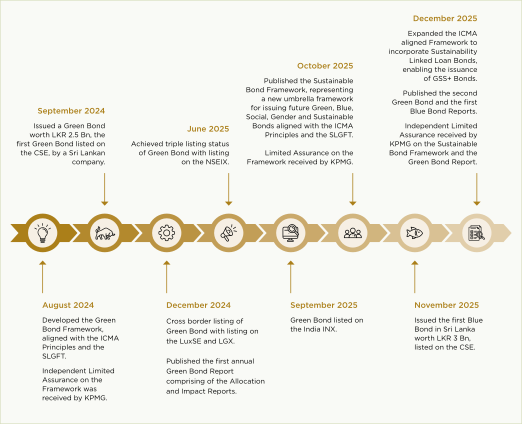
In August 2024, DFCC Bank PLC launched its Green Bond Framework (the Framework), which is aligned with the International Capital Market Association’s (ICMA) Green Bond Principles and the Sri Lanka Green Finance Taxonomy (SLGFT). Adoption of these principles and taxonomy provides assurance to investors that proceeds from green bonds will be used to finance or refinance ground-mounted and rooftop-mounted solar photovoltaic (PV) projects that support the transition to a low-carbon economy, in line with the Paris Agreement’s long-term temperature goal. The Green Bond Framework was reviewed and assurance provided by KPMG Sri Lanka (KPMG).
Following the establishment of the Framework, DFCC Bank launched Sri Lanka’s first-ever green bond in September 2024, raising LKR 2.5 Bn through an Initial Public Offering. This milestone marked a significant advancement in sustainable finance and renewable energy development in the country. The senior, listed, rated, unsecured bond, redeemable in three years, provided a novel investment opportunity for environmentally conscious investors. The bond was oversubscribed on the first day and is listed on the Colombo Stock Exchange. Building on its domestic success, the bond achieved an unprecedented multi-listing through partnerships with the Luxembourg Stock Exchange (LuxSE), with display on the Luxembourg Green Exchange (LGX) in 2024, and subsequently with India’s National Stock Exchange International Exchange (NSEIX) and the India International Exchange (IFSC) Limited (India INX) at Gujarat International Finance Tec-City (GIFT City) in 2025. This integration into global capital markets enhanced access to international investors and demonstrated the Bank’s commitment to aligning local climate priorities with global sustainable finance flows.
As of 31 December 2025, DFCC Bank had issued one green bond amounting to LKR 2.5 Bn and had secured six green loans amounting to LKR 2.5 Bn under the Framework. Proceeds raised from this issuance were allocated to ground-mounted solar projects across Sri Lanka, contributing 28.6 MW of installed clean energy capacity to the national grid and avoiding more than 16,760 tCO₂e annually from completed projects and estimated 6,029 tCO₂e annually from projects under construction. These outcomes support DFCC Bank’s progress towards its net zero target by 2050. The financed projects also contribute to the United Nations Sustainable Development Goals (SDGs), in particular SDG 7 (Affordable and Clean Energy) and SDG 13 (Climate Action).
In 2025, the Green Bond Framework was expanded to a Sustainable Bond Framework. With the latest launched in December 2025, the revised framework incorporates the latest ICMA bond principles i.e., the Green Bond Principles (June 2025), Bonds to Finance the Sustainable Blue Economy: A Practitioner's Guide (September 2023), Social Bond Principles (June 2025), Bonds to Bridge the Gender Gap: A Practitioner’s Guide to Using Sustainable Debt for Gender Equality (November 2021), Sustainability Bond Guidelines (June 2021), including the Guidelines for Sustainability-Linked Loans Financing Bonds (June 2024) issued by the Loan Market Association (LMA) and ICMA, the Sustainability-Linked Loan Principles (March 2025) issued by the Asia Pacific Loan Market Association (APLMA), LMA and the Loan Syndications and Trading Association (LSTA), in addition to the SLGFT (May 2022) issued by the Central Bank of Sri Lanka. This framework was also reviewed and limited assurance provided by KPMG.
In line with the Framework, DFCC Bank is committed to publicly disclosing the allocation of proceeds and the associated environmental impacts of its green bond on an aggregate portfolio basis in its Annual Report. This Green Bond 2024 Report as of 31 December 2025, included within the Annual Report, represents DFCC Bank’s second update to investors and lenders and will be made available on the Bank’s website and the Colombo Stock Exchange website.
In addition, DFCC Bank has obtained post-issuance assurance from KPMG to confirm that the allocation and impact reporting is aligned with the Framework, the ICMA Green Bond Principles, and the SLGFT. The areas covered by the limited assurance report are marked with “LA”.
GRI
203-1
203-2
Our Sustainable bond Journey
Green Bond Structure
Overview of the Framework
The DFCC Green Bond Framework establishes the basis for the identifying, selecting, verifying, and reporting on Eligible Green Projects funded through an amount equivalent to the proceeds of Green Bonds issued by DFCC Bank, as well as for the management of such proceeds.
The process for evaluating and selecting eligible Green Projects is described in detail in the Framework and is graphically illustrated below.
Use of proceeds
Eligible projects categories:
- Financing the establishment, acquisition, expansion, and/or ongoing management of on-shore ground and rooftop mounted solar PV power generation facilities
- Refinancing existing on shore ground and rooftop mounted PV power generation facilities, provided such projects were approved for financing by the Bank and were commissioned within a 2 year “look back” period from the date the project was earmarked for funding by the proceeds of the Green Bond
Process for project evaluation and selection
Allocation of Green Bond proceeds will be made to eligible green projects within 18 months of issuance. Project identification, screening, selection, and earmarking will follow the Bank’s established credit, environmental and social (E&S), and risk management processes.
The Sustainability Department will assess recommended projects against Green Bond eligibility criteria and E&S safeguards, earmark approved projects, and coordinate with Lending Departments and the Integrated Risk Management Department, subject to Board or delegated authority approval.
Management of proceeds
All Green Bond proceeds will be directed towards qualifying Eligible Green Projects, managed in a portfolio approach.
The complete allocation of Green Bond proceeds will occur within 18 months of issuance. Until allocated, these funds will be temporarily invested in cash or cash equivalents or Sri Lanka Government securities.
Should a selected Eligible Green Project default, terminate, or otherwise no longer meet the eligibility criteria, the allocated proceeds portion will be redirected. The reallocation will follow DFCC Bank’s established internal policies and procedures, ensuring the funds are directed towards other qualifying Eligible Green Projects.
Reporting
An annual Allocation Report will be published on a quarterly basis until full allocation of Green Bond proceeds, and thereafter on an annual basis.
An Impact Report will be published on an annual basis.
The allocation and impact reports will be publicly disclosed in DFCC Bank’s Annual Report on an aggregate portfolio basis.
The annual allocation reports and impact reports will be reviewed by the Independent External Verifier
Exclusionary Criteria
The proceeds from the Green Bond Issuance will not be used to finance loans linked to projects in DFCC Bank’s Exclusion List.
Green Bond Issuance
On 12 September 2024, DFCC Bank issued its inaugural green bond of LKR 2,500 Mn aggregate nominal amount of fixed rate notes due 12 September 2027. All financing was exclusively earmarked for the capital expenditure of designated projects, and no portion of the financing was allocated toward supporting clients’ operating cash flows or working capital requirements.
| Green Bond Details | |
| Issuer | DFCC Bank PLC |
| Type | Senior, Listed, Rated, Unsecured, Redeemable Green Bond |
| Tenure | 3 years |
| Interest Rate | Fixed at 12.00% per annum |
| Coupon Frequency | Annual |
| Capital Repayment | Bullet repayment at the end of the tenure |
| Issue Size | Up to LKR 2.5 Bn |
| Minimum Subscription | LKR 10,000 |
| Issue Price | LKR 100 per bond |
Allocation Report of DFCC Green Bond
As of 31 December 2025, DFCC Bank had issued one green bond under the Framework amounting to LKR 2,500 Mn. One hundred percent of the bond proceeds were allocated within six months of issuance. The objective of the issuance was to contribute to climate change mitigation. All proceeds were allocated to ground-mounted solar projects across the island.
The Green Bond Asset Portfolio as of 31 December 2025 comprises financed assets related to both completed projects and projects under construction. DFCC Bank aims to ensure that the total outstanding balance of the Bank’s Green Bond Asset Portfolio remains equal to or greater than the total amount of outstanding green bond issuances. A summary of the portfolio utilisation of proceeds and allocation as at the end of 2025 is presented below.
Report on Allocation of Proceeds as of 31 December 2025 “LA”
| Value LKR Mn |
Allocation/ earmark of proceeds LKR Mn |
Allocation/ earmark of proceeds |
Unallocated LKR Mn |
Unallocated | |
| Allocation of Proceeds | 2,500 | 2,500 | 100% | – | 0% |
Utilisation of Proceeds as of 31 December 2025 “LA”
| Eligible category | Project type | Allocation/ earmark of proceeds LKR Mn |
Allocation/ earmark of proceeds |
Use of proceeds/ disbursements LKR Mn |
Use of proceeds/ disbursements |
| Renewable Energy – Ground mounted solar |
New projects* | 2,500 | 100% | 2,470.19 | 99% |
| Refinanced projects* | – | 0% | – | 0% |
* A loan granted for a project included a component disbursed prior to the bond issuance, which was subsequently refinanced upon bond allotment. The remaining portion of the loan was financed after the bond issuance. However, this loan was fully settled in December 2025. The settled exposure was replaced with new eligible projects to ensure that the bond proceeds remained fully earmarked and allocated by year-end.
**Unallocated proceeds amounting to LKR 29.81 Mn is temporarily held/invested in Sri Lanka Government securities
Impact Report of Dfcc Bank’s Green Bond “La”
| Eligible Category | Impact Indicator | Actual Environmental Impact |
Estimated Environmental Impact |
| Renewable Energy – Ground mounted solar | Number of eligible projects in operation | 4 | |
| Capacity of renewable energy plants (MW) in operation | 23.00 | ||
| Annual renewable energy generation (kWh) | 24,525,590 | ||
| Grid Emission Factor (kg–CO2/kWh) | 0.6803 | ||
| Annual reduced/avoided greenhouse gas emissions (tCO2) | 16,685 | ||
| Annual avoided/reduced greenhouse gas emissions (tCO2e) | 16,760 | ||
| Annual avoided/reduced greenhouse gas emissions (tCO2e) attributed to DFCC Bank (Note 10 under Impact Methodology and Metrics) |
12,165 | ||
| Number of eligible projects under construction | 2 | ||
| Capacity of renewable energy plants (MW) under construction | 5.60 | ||
| Estimated annual renewable energy generation (kWh) | 8,822,410 | ||
| Grid Emission Factor (kg–CO2/kWh) | 0.6803 | ||
| Estimated annual reduced/avoided greenhouse gas emissions (tCO2) | 6,002 | ||
| Estimated annual reduced/avoided greenhouse gas emissions (tCO2e) | 6,029 | ||
| Estimated annual avoided/reduced greenhouse gas emissions (tCO2e) attributed to DFCC Bank (Note 10 under Impact Methodology and Metrics) | 4,040 |
Impact Methodology and Metrics
1. The environmental impacts of DFCC Bank’s Green Bond Asset Portfolio are reported to the extent practicable and where robust and widely accepted methodologies are available. All environmental impacts disclosed are estimates derived from available actual data or, where necessary, appropriate proxy data.
2. Impact reporting for DFCC Bank’s Green Bond Asset Portfolio is guided by the core indicators and recommendations set out in the International Capital Market Association’s (ICMA) Harmonised Framework for Impact Reporting.
3. The number of eligible projects refer to the ground-mounted solar projects that are either in operation or under construction.
4. The reported capacity of renewable energy plants represents the installed capacity, expressed in megawatts (MW), of ground-mounted solar projects that are either in operation or under construction.
5. Annual renewable energy generation (kWh/year) refers to the actual electricity generated on an annual basis by solar projects that are in operation. Estimated annual renewable energy generation (kWh/year) represents the expected electricity output upon completion of projects that are currently under construction.
6. Actual renewable energy generation for the reporting period is lower relative to installed capacity, as all operational projects (except one commissioned in the previous year), were brought online at staggered intervals during the second half of the year, resulting in partial-year generation.
7. The calculation of greenhouse gas (GHG) emissions reduced or avoided is based on the grid emission factor derived from the combined margin, as reported in “Sri Lanka Energy Balance 2022: An Analysis of Energy Sector Performance”, published by the Sri Lanka Sustainable Energy Authority.
8. Annual GHG emissions reduced or avoided (tCO₂/year) represent the emissions that would have occurred in the absence of the project. For operational projects, this is calculated by multiplying the actual electricity generated (kWh) by the applicable grid emission factor. Estimated annual GHG emissions avoided (tCO₂/year) for projects under construction are calculated by multiplying the estimated electricity generation at completion (kWh) by the same emission factor.
9. Grid-electricity emissions are dominated by CO₂, with methane (CH₄) and nitrous oxide (N₂O) contributing only a small fraction of total emissions from stationary combustion. Based on the 2006 IPCC Guidelines for National Greenhouse Gas Inventories (Table 2.2: Default Emission Factors for Stationary Combustion in Energy Industries), the combined contribution of CH₄ and N₂O is estimated at 0.45% of CO₂ emissions for grid-connected fossil-fuel electricity generation. Accordingly, for the purpose of tCO₂e calculations in this report, the “e” component (i.e., CH₄ + N₂O) is incorporated by applying a factor equal to 0.45% of the CO₂ emissions value.
10. Environmental impacts are calculated at the individual loan (asset) level and reported in aggregate on a portfolio basis. For each financed project, DFCC Bank’s attributable share of environmental impact is determined based on the sanctioned loan value relative to the total project cost. Portfolio-level impacts represent the sum of loan-level attributable impacts. Avoided emissions are attributed in proportion to DFCC Bank’s share of financing for each project and reflect emissions avoidance enabled by the Bank’s financing. These figures do not represent exposure-weighted financed emissions.
Featured Projects
DFCC Bank’s green bonds help finance projects with use of proceeds dedicated to solar energy. The following are examples of projects that are financed under DFCC Bank’s green bond issuance.

Ground-mounted solar power plant at Maho
DFCC Bank provided financing to PAP PTS Solar (Pvt) Ltd, a subsidiary of the Panasian Power PLC, for the development of a ground-mounted solar photovoltaic power plant located in Atampolayagama, Galagedara, Maho. The project contributes 5 MW of installed capacity to Sri Lanka’s national grid, supporting the country’s renewable energy expansion objectives. The solar plant was commissioned on 20 June 2025 and has generated 5,062,542 kWh of electricity up to 31 December 2025 resulting in the avoidance of approximately 3,459.55 tCO2e of greenhouse gas emissions. Reflecting the Panasian Power PLC’s commitment to deploying advanced technologies where feasible, the project incorporates bifacial N-type solar PV modules with single-axis tracking technology, enabling the panels to follow the sun’s path and maximise solar irradiation capture.

Ground-mounted solar power plant at Matara
PAP SPGM (Pvt) Ltd, another subsidiary of the Panasian Power Group, was provided financial support under the DFCC Green Bond for its ground-mounted solar power plant located at Batadalehena, Uda-Aparekka, Matara. The solar plant contributes 5 MW of installed capacity to the national grid. The project was commissioned on 17 November 2025 and is expected to generate 10,951,110 kWh of electricity annually, while avoiding approximately 7,483.57 tCO₂e of greenhouse gas emissions each year.
Refer pages 519-521 for the Independent Practitioners’ Limited Assurance Report on the Report on certain information included in the Green Bond 2024 Report of DFCC Bank PLC.
DFCC Bank PLC
DFCC Blue Bond 2025 Report
31 December 2025
Introduction

In November 2025, DFCC Bank PLC issued Sri Lanka’s first listed Blue Bond, raising up to LKR 3 Bn through a listed, rated, senior, unsecured, redeemable bond instrument with three to five-year tenures. The issuance was listed on the Colombo Stock Exchange and rated A(lka) by Fitch Ratings Lanka Limited.
The Blue Bond represents the next phase of DFCC Bank’s sustainable finance journey, extending beyond renewable energy financing under the Green Bond to explicitly support Sri Lanka’s blue economy. As an island nation, Sri Lanka’s economic resilience is closely linked to the health of its marine ecosystems, coastal infrastructure, river basins, fisheries, tourism, and water resources. The Blue Bond is designed to mobilise domestic capital toward investments that promote sustainable ocean-based industries, improve water quality, enhance climate resilience, and protect marine and coastal ecosystems.
The issuance was undertaken under DFCC Bank’s Sustainable Bond Framework (October 2025), which governs Green, Blue, Social, Gender and Sustainability Bonds. Under the Framework, which was developed in collaboration with the Global Green Growth Institute (GGGI), Blue Bonds are defined as a sub-category of Green Bonds, whereby an amount equal to the net proceeds is exclusively applied to finance or refinance Eligible Blue Projects.
The Eligible Blue Projects identified in the Bank’s Sustainable Bond Framework was based on the Green Bond Principles (June 2025), “Bonds to Finance the Sustainable Blue Economy A Practitioner’s Guide” (September 2023) which is based on Green Bond Principles, and Sustainability Bond Guidelines (June 2021) published by the ICMA, along with the SLGFT. This ensures transparency and alignment with recognised best practices in sustainable finance. Furthermore the Blue Bond is anchored in DFCC Bank’s Sustainability Strategy (2020–2030), ESG Policy, and ESMS.
As at 31 December 2025, Eligible Blue Projects were in the process of identification and screening in accordance with the Framework. Pending allocation, proceeds have been temporarily invested in Sri Lanka Government securities in line with the Management of Proceeds provisions of the Framework.
Instrument Overview
The key features of the Blue Bond Issue 2025 are as follows:
| Blue Bond Details | |||||
| Issuer | DFCC Bank PLC | ||||
| Type | Listed, Rated, Senior, Unsecured, Redeemable Blue Bond | ||||
| Structure | Type | Tenure | Issue Price (LKR) |
Interest Payment Frequency |
Coupon Rate (p.a.)/AER |
| A | 3 years | 100.00 | Annual | 9.75% | |
| B | 3 years | 75.65 | Zero Coupon Bond | 9.75% annual compounding on the Issue Price payable on the Date of Redemption | |
| C | 4 years | 100.00 | Annual | 10.25% | |
| D | 4 years | 67.68 | Zero Coupon Bond | 10.25% annual compounding on the Issue Price payable on the Date of Redemption | |
| E | 5 years | 100.00 | Annual | 10.50% | |
| F | 5 years | 60.70 | Zero Coupon Bond | 10.50% annual compounding on the Issue Price payable on the Date of Redemption | |
| Coupon Frequency | Type A, C and E Blue Bonds: Annual Type B, D, and F Blue Bonds: Date of Redemption | ||||
| Capital Repayment | Bullet repayment at the end of the tenure | ||||
| Issue Size | Up to LKR 3 Bn | ||||
| Par Value | LKR 100.00 | ||||
Use of Proceeds
An amount equal to the net proceeds of the Blue Bond will be allocated to finance or refinance Eligible Blue Projects, as defined in the Sustainable Bond Framework. The eligible Blue categories include sustainable water and wastewater management; marine ecosystem conservation and restoration; pollution prevention in marine and riverine systems; climate-resilient coastal infrastructure; sustainable fisheries and aquaculture; marine renewable energy; clean maritime transport; sustainable coastal and marine tourism.
In addition to DFCC Bank’s Exclusion list, the blue-specific exclusion criteria are also applied in line with ICMA’s Blue Economy guidance, including restrictions on destructive fishing practices, activities impacting IUCN red-listed species, non-compliance with IMO/MARPOL standards, and environmentally harmful coastal developments.
Allocation Report of DFCC Blue Bond
| Value LKR Mn |
Allocation/ earmark of proceeds LKR Mn |
Allocation/ earmark of proceeds |
Unallocated LKR Mn |
Unallocated | |
| Utilisation of Proceeds | 3,000 | – | 0% | 3,000 | 100% |
The unallocated proceeds are temporarily invested in government securities until full allocation. DFCC Bank intends to allocate the proceeds within 18 months of issuance, in line with the Framework.