



At the moment, there are no entries available for display



GRI
3-1
DFCC Bank’s materiality approach is dynamic and grounded in double materiality assessing both our outward impacts on the economy, society, and the environment (impact materiality) and the way these topics affect our enterprise value, resilience, and long-term performance (financial materiality). Our assessment reflects the Bank’s strategic context, stakeholder priorities, and risk/opportunity outlook. It is aligned with Integrated Reporting principles, GRI topic families, and mandatory sustainability disclosure standards such as SLFRS S1 and S2.
Materiality Determination Process
During the year, the Bank carried out a refreshed materiality assessment to ensure our sustainability priorities continue to reflect stakeholder expectations, emerging regulatory requirements and the rapidly evolving operating environment. The process considered internal strategic priorities, sector-wide risks and opportunities, peer practices as well as local and global sustainability frameworks. Stakeholder insights were captured through sharing a structured questionnaire among stakeholders supported by direct engagements, customer interactions, and ongoing dialogue with regulators, employees, suppliers, and community.
This materiality assessment resulted in the identification and validation of five key material themes and a refined set of 11 material sub-topics which are most relevant to the DFCC Bank’s value creation over short, medium and long term. These material topics represent areas with the greatest significance from both an impact materiality perspective reflecting how it impacts on stakeholders and environment; and a financial materiality perspective reflecting its influence on the Bank’s resilience, risk profile, performance and ability to create value.
Following this materiality assessment, the Bank applied a structured five step, materiality determination process to ensure that each material topic is accurately prioritised, governed, and embedded into decision-making and reporting frameworks.
Potential sustainability topics were identified through
regulatory developments, industry standards, peer
benchmarking, DFCC’s strategic direction, internal
policies, and continuous stakeholder engagement.
Each potential topic was
assessed for:
Impact materiality: the scale,
likelihood, and nature of
DFCC’s actual or potential
impacts on people,
communities, and the
environment.
Financial materiality:
the influence on DFCC’s
resilience, risk exposure,
credit quality, operational
continuity, and long‑term
value creation.
Based on stakeholder
significance and strategic
relevance, the most material
topics were prioritised
and refined. The final list
of themes and sub‑topics
was validated by senior
management and relevant
Board‑level Committees
to ensure alignment with
risk appetite, strategy, and
regulatory expectations.
Material topics were
incorporated into the
Bank’s strategic pillars,
integrated risk management,
sustainability initiatives, and
performance scorecards.
Progress is monitored
throughout the year through
management of dashboards,
KPIs, KRIs, and periodic
Board reporting.
The validated material
themes and sub‑topics
are disclosed in DFCC’s
Integrated Annual Report,
sustainability‑related
reporting and corporate
website.
GRI
3-2
| Material theme | Sub-topics | Primary stakeholders | GRI aligned material topic addressed | Reference to management approach | |
| 1. | Resilient and responsible banking | Resilient business | Customers, Investors, Regulator | GRI 201 – Economic performance GRI 205 – Anti–corruption GRI 207 – Tax | Page 61 |
| Brand and reputation | Customers, Investors, Community | GRI 417 – Marketing and labelling | Page 61 | ||
| 2. | Secure and Innovative digital transformation | Technological advancements | Customers, Employees, Fintech partnerships | GRI 418 – Customer privacy GRI 404 – Training and education | Page 62 |
| Data privacy and cybersecurity | Customers, Regulator | GRI 418 – Customer Privacy | Page 62 | ||
| Developing sustainable financial products and services | Customers, Investors, Community, Development partners | GRI 203 – Indirect economic impacts | Page 62 | ||
| 3. | Climate action and ecological enhancement | Climate action | Regulator, Investors, Community, Industry associations | GRI 201 – Economic Performance GRI 302 – Energy GRI 305 – Emissions | Page 63 |
| Biodiversity | Regulator, Investors, Community, Industry, associations | GRI 201 – Economic Performance GRI 302 – Energy GRI 305 – Emissions | Page 63 | ||
| 4. | Ethical conduct and compliance | Ethical, transparent and accountable business | Regulator, Customers, Employees | GRI 205 – Anti–corruption GRI 207 – Tax | Page 64 |
| Risk Management and Compliance | Regulator, Board committees | GRI 205 – Anti–corruption GRI 207 – Tax | Page 64 | ||
| Sustainable procurement and resource efficiency | Suppliers and Service providers | Page 64 | |||
| ESG Integration into business operations | Employees, Customers, Regulator, Investors | Page 64 | |||
| 5. | Financial Inclusion and Socio–economic Stability | Inclusive economic growth | Community, Industry associations, Regulator, Customers | GRI 201 – Economic performance GRI 203 – Indirect economic impacts | Page 65 |
| Talent management | Employees | GRI 202 – Market presence GRI 401 – Employment GRI 404 – Training and Education GRI 405 – Diversity and Equal opportunity GRI 406 – Non–Discrimination | Page 65 | ||
| Women empowerment | Community, Customers | ||||
| Diversity, Equity and Inclusion (DEI) | Employees, Customers, Community | ||||
| Customer centricity | Customers | GRI 418 – Customer privacy | Page 65 | ||
| Resilient communities | Community, Industry associations | GRI 203 – Indirect economic impacts GRI 413 – Local communities | Page 65 | ||
Mapping to DFCC Bank's EESG Perspective
Economic
Environmental
Social
Governance
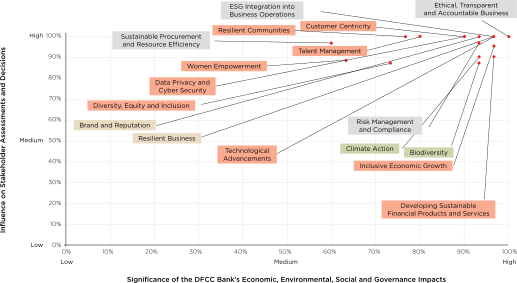
Inclusive Visual Materiality Matrix
This matrix illustrates the relative positioning of DFCC’s material themes across two lenses: (i) Influence on Stakeholder Decisions; and (ii) Significance of Bank’s Economic, Environmental, Social and Governance (EESG) impacts.
Changes to Materiality
During the year, DFCC Bank undertook a refreshed and more structured materiality assessment, which resulted in several refinements to our material topics. Changes in the external environment such as evolving economic conditions, heightened climate-related expectations, digital transformation trends, and stronger governance requirements prompted a reassessment of how issues interact and influence long term value creation. Through this enhanced double materiality lens, several related matters were consolidated, clarified, or repositioned to better reflect strategic relevance and stakeholder expectations. As a result, the Bank’s updated materiality table now presents five overarching material themes and seventeen streamlined sub topics, replacing a broader set of topics previously reported. This refinement ensures clearer alignment to DFCC’s strategic pillars, strengthens reporting transparency, and more accurately captures the sustainability issues that are most significant to DFCC’s performance, resilience, and stakeholder impact.
Embedding Material Themes into Our Management Approach
The following sections outline DFCC Bank’s Management Approach to each material theme detailing how the Bank governs, manages and monitors associated topics to ensure meaningful progress, informed decision-making and transparent reporting.
1
Resilient and
Responsible Banking
Responsible Banking
Resilient and Responsible Banking ensures that DFCC Bank
maintains a strong financial fundamental, transparent conduct
and stakeholder trust through its journey. It integrates robust
risk culture, sound capital/liquidity management and proactive
reputation stewardship across the Bank.
Resilient Business
Brand and Reputation
Management Approach
Safeguarding capital, liquidity, and portfolio quality to
withstand shocks and support sustainable growth.
Strengthening stakeholder confidence through transparent
disclosures, responsible conduct, and consistent service.
Why this is Material
Financial resilience and reputation are foundational to DFCC Bank's ability to serve customers, access funding, and support the real economy. In a dynamic environment, disciplined risk management and clear communications reduce volatility, protect enterprise value, and anchor long-term trust among customers, investors, regulators, and communities.
How it helps deliver our Strategy
Customer Centric Excellence:
Stable, trusted platform for consistent service and fair
outcomes
Digital Innovation
and Transformation:
and Transformation:
Confidence to invest in secure, modern systems
Empowered Talent and Culture:
Build a strong culture of accountability by ensuring
employees understand and follow clear ethical standards
Strategic Growth and
Market Expansion:
Market Expansion:
Capital strength enables strategic growth
Operational Efficiency
and Agility:
and Agility:
Streamlined processes reduce turnaround and cost
Sustainable Impact
and Governance:
and Governance:
Transparent, ethical practices reinforce good governance
Associated Risks and Opportunities
Related Risks
- Credit Risk
- Market Risk
- Liquidity Risk
Related Opportunities
- Lower cost of capital
- Stronger investor confidence
- Strategic partnerships
Actions (Detailed management approach)
Reference to Capital Reports
Financial Capital (pages 87 to 93)
Manufactured Capital (pages 98 to 100)
Intellectual Capital (pages 101 to 104)
Human Capital (pages 105 to 119)
Social and Relationship Capital
(pages 120 to 136)
(pages 120 to 136)
Alignment with SDGs


2
Secure and Innovative
Digital Transformation
Digital Transformation
Secure and Innovative Digital Transformation strengthens DFCC
Bank's digital backbone, protects customer data, and scales
inclusive, sustainable financial solutions through safe,
user-centred innovation.
Technological Advancements
Data Privacy and Cybersecurity
Developing Sustainable Financial Products and Services
Management Approach
Modernising core platforms and channels for reliability,
speed, and agility.
Protecting personal and transactional data through robust
controls and response readiness.
Embedding sustainability attributes and access features into
digital offerings.
Why this is Material
Digital channels are central to customer experience, cost-efficiency, and market reach. Strong privacy and cybersecurity frameworks preserve trust, while innovation enables tailored, sustainable solutions and drives adoption across customer segments.
How it helps deliver our Strategy
Customer Centric Excellence:
Friction-lite journeys and secure experiences.
Digital Innovation
and Transformation:
and Transformation:
API-ready, scalable architecture and analytics.
Empowered Talent and Culture:
Upskilling in digital, data, and cyber disciplines.
Strategic Growth and
Market Expansion:
Market Expansion:
Broader reach via digital distribution and partnerships.
Operational Efficiency
and Agility:
and Agility:
Automation reduces cycle time and errors.
Sustainable Impact
and Governance:
and Governance:
Digital access and green products support ESG goals.
Associated Risks and Opportunities
Related Risks
- Cyber incidents
- System downtime
- Third-party/vendor failures
- Privacy non-compliance
Related Opportunities
- Faster innovation cycles
- Digital adoption
- Embedded finance partnerships
- Greener/paperless operations
Actions (Detailed management approach)
Reference to Capital Reports
Financial Capital (pages 87 to 93)
Manufactured Capital (pages 98 to 100)
Intellectual Capital (pages 101 to 104)
Alignment with SDGs
3
Climate Action and
Ecological Enhancement
Ecological Enhancement
Climate Action and Ecological Enhancement integrates climate
risk, supports green finance, and encourages nature-positive
outcomes, while reducing the carbon footprint.
Climate Action
Biodiversity
Management Approach
Managing climate risks and enabling low-carbon transition via
financing and operations.
Considering nature impacts/ dependencies in due diligence,
especially for higher-risk sectors.
Why this is Material
Climate and nature risks affect borrower viability, collateral values, and community resilience. Addressing these risks while financing transition and adaptation protects portfolio quality, opens growth avenues, and supports national sustainability goals.
How it helps deliver our Strategy
Customer Centric Excellence:
Advisory and products for climate-resilient clients.
Digital Innovation
and Transformation:
and Transformation:
Tools to screen financed emissions and nature risk.
Empowered Talent and Culture:
Climate/nature literacy embedded in teams.
Strategic Growth and
Market Expansion:
Market Expansion:
Green assets and transition finance growth.
Operational Efficiency
and Agility:
and Agility:
Resource-efficient operations lower costs.
Sustainable Impact
and Governance:
and Governance:
Credible ESG integration and transparent reporting.
Associated Risks and Opportunities
Related Risks
- Physical and transition risks
- Regulatory disclosure gaps
Related Opportunities
- Green lending
- Blended-finance partnerships
- Product innovation
Actions (Detailed management approach)
Reference to Capital Reports
Financial Capital (pages 87 to 93)
Intellectual Capital (pages 101 to 104)
Social and Relationship Capital (pages 120 to 136)
Natural Capital (pages 137 to 159)
Alignment with SDGs


4
Ethical Conduct
and Compliance
and Compliance
Ethical Conduct and Compliance ensures integrity, transparency,
and accountability across DFCC Bank's operations and value
chain, embedding ESG considerations into business processes and
procurement.
Ethical, Transparent
and Accountable
Business
Risk Management
and Compliance
Sustainable
Procurement and
Resource Efficiency
ESG Integration into
Business Operations
Management Approach
Upholding code of ethics
and responsible conduct.
Meeting regulatory obligations
and risk-appetite expectations.
Engaging suppliers on
ESG standards and resource
stewardship.
Embedding ESG in policies,
lending, investment, and
reporting.
Why this is Material
Strong conduct and compliance protect DFCC from legal, financial, and reputational harm. Integrating ESG into every aspect of our operations improves decision quality, enables access to capital, and builds confidence among regulators, customers, and investors.
How it helps deliver our Strategy
Customer Centric Excellence:
Fair outcomes and transparent
communication.
Digital Innovation
and Transformation:
and Transformation:
Compliance by design
and automated controls.
Empowered Talent and Culture:
Clear standards and
ownership of conduct.
Strategic Growth and
Market Expansion:
Market Expansion:
License to operate and invest.
Operational Efficiency
and Agility:
and Agility:
Reduced rework from
compliance breaches.
Sustainable Impact
and Governance:
and Governance:
Credible ESG practices
and disclosures.
Associated Risks and Opportunities
Related Risks
- Regulatory breaches
- Unethical conduct
- Supplier ESG violation
- Greenwashing concerns
Related Opportunities
- Strong investor relations
- Improved efficiency via responsible sourcing
Actions (Detailed management approach)
Reference to Capital Reports
Human Capital (pages 105 to 119)
Social and Relationship
Capital (pages 120 to 136)
Alignment with SDGs
5
Financial Inclusion and
Socio–economic Stability
Socio–economic Stability
Financial Inclusion and Socioeconomic Stability expands access
to finance, promotes equitable opportunities, and supports
resilient communities creating shared value and strengthening
DFCC Bank's long-term customer base.
Inclusive Economic Growth
Talent Management
Women Empowerment
Diversity, Equity and Inclusion (DEI)
Customer Centricity
Resilient Communities
Management Approach
Increasing access to appropriate finance for underserved
segments and MSMEs.
Building skills, engagement, and leadership pathways to
deliver superior service.
Supporting women-led enterprises and livelihoods through
targeted solutions.
Ensuring a fair, inclusive workplace and customer access.
Continuously improving experiences, transparency, and
responsiveness.
Partnering to strengthen financial literacy and local economic
resilience.
Why this is Material
Inclusive finance and a skilled, diverse workforce improve customer outcomes, portfolio diversification, and brand trust. Strengthening community resilience and women’s economic participation generates positive social impacts while expanding DFCC’s sustainable growth opportunities.
How it helps deliver our Strategy
Customer Centric Excellence:
Needs-based products and faster resolution.
Digital Innovation
and Transformation:
and Transformation:
Digital access and literacy broadens reach.
Empowered Talent and Culture:
Skilled, engaged people deliver better outcomes.
Strategic Growth and
Market Expansion:
Market Expansion:
Approach new markets and customer segments such as MSME,
women entrepreneurs, minors and teens, gig workers,
migrant workers and retirees.
Operational Efficiency
and Agility:
and Agility:
Simpler, customised journeys and scalable models.
Sustainable Impact
and Governance:
and Governance:
Social impact aligned to national goals.
Associated Risks and Opportunities
Related Risks
- Regulatory limitations
- Misselling
- Greater operational expenses
Related Opportunities
- Strong investor relations
- Improved efficiency via responsible sourcing
- Blue ocean markets and segmental leadership
- Stronger brand positioning and perception
- Word-of-mouth advertising
Actions (Detailed management approach)
Reference to Capital Reports
Financial Capital (pages 87 to 93)
Human Capital (pages 105 to 119)
Social and Relationship Capital (pages 120 to 136)
Alignment with SDGs


