



At the moment, there are no entries available for display



GRI
2-25
RISK CULTURE AND VISION
The Bank adopts a comprehensive and well-structured mechanism for assessing, quantifying, managing and reporting risk exposures which are material and relevant for its operations within a clearly defined risk management framework. An articulated set of limits under the risk management framework explains the risk appetite of the Bank for all material and relevant risk categories and the risk capital position. Risk management is blended into the gamut of the Bank’s activities, including strategic, business and financial planning and customer transactions. As a result, business and risk management goals and responsibilities are aligned across the organisation.
Risk is managed systematically at Group level, covering the enterprise, individual business units, products, services, transactions, and across all geographic locations.
The following are the broad risk categories.
Risks covered under Pillar I of Basel regulations
- Credit risk
- Market risk including foreign currency risk, equity price risk, and interest rate risk in the trading book
- Operational risk
Risks covered under Pillar II of Basel regulations
- Business risk and strategic risk
- Liquidity risk
- Settlement risk
- Credit concentration risk
- Technology and information security risk
- Interest rate risk in the banking book
- Legal risk
- Compliance risk
- Reputational risk
- Off balance sheet exposures and securitisation risk
- Environmental, social and governance risks
GENERAL POLICIES FOR RISK MANAGEMENT
The general policies and procedures for risk management are listed below:
- The Board of Directors is inculcating a strong risk governance culture for maintaining a prudent integrated risk management function in the Bank.
- Promoting awareness of risk policies to all Bank employees.
- Establishing well-defined organisational responsibilities for the “Three Lines of Defence” in the Bank for management of risks, which consists of the risk-assuming functions, independent risk management and compliance functions and the internal and external audit functions.
- Ensuring compliance with regulatory and other laws underpinning the risk management and business operations of the Bank.
- 5Centralised risk management function which is independent of risk assuming functions.
- Strengthening internal expertise and capabilities for risk management, to ensure that the Bank’s risk management capabilities are sufficiently robust and effective to meet the strategic objectives of the Bank.
- An assessment of risks involved on an incremental and portfolio basis when designing, redesigning products and processes before implementation.
- Adoption of the principle of risk-based pricing.
- Ensuring that the Board approved target capital requirements, which are more stringent than the minimum regulatory capital requirements, are not compromised.
- Aligning risk management strategy to the Bank’s business strategy.
- Ensuring timely, prudent, accurate risk disclosures to relevant parties.
- Defining risk appetite of the Bank, aligning with the Bank’s strategic, capital, and financial plans, which are articulated through a Risk Appetite Statement.
- Periodic review of risk management policies and practices to align with the developments in regulations, business environment, internal environment, and industry best practices.
RISK GOVERNANCE
Three Lines of Defence
The Bank’s risk management framework embodies accountability, responsibility, independence, communication, reporting, and transparency. This is implemented by way of the “Three Lines of Defence” concept as follows:
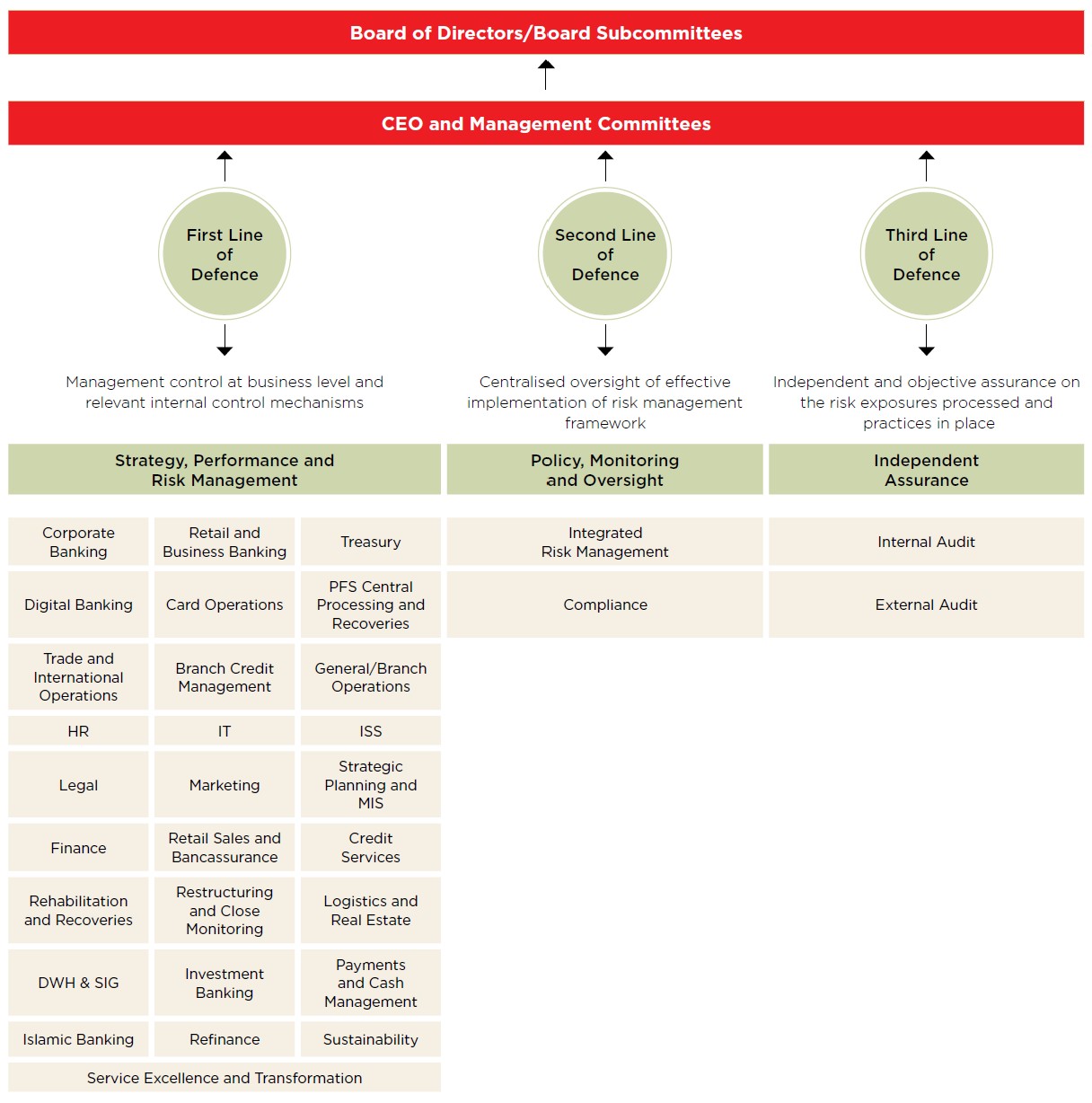
The First Line of Defence encompasses management control at business level, ensuring compliance with relevant internal control mechanisms, while taking responsibility and accountability for the daily management of business operations.
The Second Line of Defence consists of independent risk monitoring, validation, and centralised oversight of the effective implementation of the risk management framework. This also includes policy review and compliance, carried out by the Integrated Risk Management Department (IRMD) and the Compliance Department.
The Third Line of Defence is provided by the independent assurance and quality checks conducted by the internal and external audit functions.
The Bank’s risk governance includes setting and defining the risk appetite, risk limits, risk management functions, capital planning, risk management policies, risk infrastructure, and risk profile analysis. The Bank exhibits an established risk management culture and effective risk management approaches, systems, and controls. Policy manuals, internal controls, segregation of duties, clearly demarcated authority limits and internal audits form a part of key risk management tools.
The Bank’s risk management framework covers all aspects of risk governance, including risk management structure, which is implemented through different subcommittees and clearly defined reporting lines. The framework ensures that the risk management unit is functioning independently. The Chief Risk Officer (CRO) functions by directly reporting to the Board Integrated Risk Management Committee (BIRMC).
RISK POLICIES AND GUIDELINES
A set of structured policies and frameworks recommended by the BIRMC and approved by the Board of Directors forms a key part of the risk governance structure. The integrated risk management framework stipulates, in a broader aspect, the policies, guidelines, and organisational structure for the management of overall risk exposures of the Bank in an integrated manner. This framework defines risk integration and aggregation approaches for different risk categories. In addition, separate policy frameworks detail the practices for managing key specific risks. These frameworks and policies are subject to regular review and updating. Risk Policies and Guidelines have been integrated across all business relationships to ensure alignment with the Bank’s core values and policy commitments. By embedding these commitments into business practices, the Bank maintains a responsible and transparent approach that reflects its dedication to long-term value creation and corporate responsibility.
Risk Appetite
The Bank’s risk appetite is defined in the Overall Risk Limits System (ORLS). It consists of risk limits arising from regulatory requirements, borrowing covenants, and internal limits for prudential purposes. The Limits System is a cornerstone of the risk indicators and encompasses key risk areas such as credit, market, liquidity, operational, equity, and capital position, amongst others.
Lending limits have been established to manage credit concentration to industry sectors, rating grades, borrowers and countries as part of the prudential internal limits. Industry sector limits for the lending portfolio consider the inherent diversification within the subsectors and the borrowers within broader sectors.
A dashboard with “Traffic Light” system monitors these limits monthly and quarterly and are tabled at management committees, Board subcommittees and Board of Directors for information and corrective action. These risk appetite limits are reviewed at least annually in line with the risk management capacities, business opportunities, the Bank’s business strategy and regulatory requirements.
If the risk appetite threshold has been breached or is approaching levels not desirable by the Bank, risk-mitigating measures and business controls are implemented to bring the exposure level back within the accepted range. Risk appetite, therefore, translates into operational measures such as new or enhanced limits or qualitative checks for dimensions such as capital, earnings volatility, and concentration of risks.
MAIN TOLERANCE LIMITS FOR KEY TYPES OF RISKS 2025
| Risk area | Risk appetite criteria | Limit/Range |
| Integrated risk and capital management | Total Tier I capital adequacy ratio (under Basel III) (Total Tier I capital as a percentage of total risk-weighted assets) | > 8.5% (Regulatory) Internal limit is based on ICAAP |
| Total capital adequacy ratio (under Basel III) (Total capital as a percentage of total risk-weighted assets) | > 12.5% (Regulatory) Internal limit is based on ICAAP | |
| Credit quality and concentration | Stage 3 ratio | < Industry average as published by the CBSL (Internal) |
| Stage 1 impairment cover | > 0.5% (Regulatory) | |
| Stage 3 impairment cover | > Industry average as published by the CBSL (Internal) | |
| Single borrower limit – Individual | < 30% (Regulatory) < 28% (Internal) | |
| Single borrower limit – Group | < 33% (Regulatory) < 30% (Internal) | |
| Aggregate large accommodation | < 55% (Regulatory) < 45% (Internal) | |
| Exposures to agriculture sector | > 10% (Regulatory) | |
| Exposures to industry sectors | < 5% to 20% (Internal) | |
| Aggregate limit for related parties | < 25% (Internal) | |
| Liquidity risk | Leverage ratio | > 3% (Regulatory) |
| Net Stable Funding Ratio (NSFR) | > 100% (Regulatory) > 110% (Internal) | |
| Liquidity coverage ratio (all currencies and rupee only) | > 100% (Regulatory) > 110% (Internal) | |
| Market risk | Forex net open long position or short position | As prescribed by the CBSL (Regulatory) |
| Foreign currency total borrowings | ||
| Total government security exposure | < 35% (Internal) | |
| Equity risk | Equity exposure – individual (based on capital funds of the Bank and on paid up capital of the given company) | As prescribed by the CBSL (Regulatory) |
| Aggregate equity exposure (based on capital funds of the Bank) | < 30% (Regulatory) | |
| Equity investment in each sector | < 20% to 40% (Internal) | |
| Operational risk | Gross operational direct loss | < 0.25% (Internal) |
| Gross operational potential loss | < 0.5% (Internal) |
BOARD INTEGRATED RISK MANAGEMENT COMMITTEE (BIRMC)
The BIRMC is a Board Subcommittee that oversees the risk management function as stipulated by the regulator. The Board approved charter sets out its responsibilities, which includes corporate governance requirements for Licensed Commercial Banks issued by the Central Bank of Sri Lanka (CBSL).
In accordance with the requirements of the SLFRS Sustainability Disclosure Standards — SLFRS S1: General Requirements for Disclosure of Sustainability-related Financial Information and SLFRS S2: Climate-related Disclosures — the BIRMC Charter was amended in 2025 to incorporate the Committee’s governance responsibilities relating to sustainability-related risks and opportunities (SRROs). This amendment enables the BIRMC to function as the Bank’s ''Board Sustainability Subcommittee'', providing oversight of environmental, social and governance (ESG) matters, including sustainability-related risks and opportunities on behalf of the Board. The new development enables the BIRMC to ensure that ESG risks are managed as financially material considerations and embedded into enterprise risk management practices.
The Committee consists of three Board representatives and the Chief Executive Officer (CEO), Deputy Chief Executive Officer (DCEO) and Key Management Personnel supervising broad risk categories including Chief Risk Officer (CRO), Chief Compliance Officer (CCO), Head of Treasury, who are permanent invitees to the meeting.
For a summary of responsibilities and functions of the BIRMC, refer page 284.
The BIRMC meets at least once in every two months and reviews the risk information and exposures as reported by the Integrated Risk Management Department, Treasury, Finance, Compliance, Sustainability and Service units. Risk reporting includes reports on overall risk analysis relating to the Bank’s capital, risk appetite, limits position, stress testing, any strategic risks faced by the Bank, and risk analysis of the Group companies. Additionally, they include reports covering the main risk areas such as credit, market, liquidity, operational, information systems security, compliance and ESG risks.
In 2025, six BIRMC meetings were held, where the Committee focused more on market risk, capital adequacy, credit risk, and appropriate integration of SRROs into the Bank’s overall risk management framework. The Committee also closely monitored the adequacy of risk-mitigating actions and reviewed stress testing outcomes. These measures were aligned with the Bank’s risk appetite to ensure resilience in navigating economic challenges.
SCOPE AND MAIN CONTENT OF RISK REPORTING TO THE BIRMC
| Risk type | Scope and main content of risk reporting |
| Overall risk |
|
| Credit risk |
|
| Market and liquidity risk |
|
| Operational risks |
|
| Technology and information security risk |
|
| Environmental, Social and Governance (ESG) risks |
|
| Compliance risk |
|
Involvement of management committees
Several management committees play an important role in risk management.
The Credit Committee (CC), Asset and Liability Management Committee (ALCO), Operational Risk Management Committee (ORMC), Operational Risk SubCommittee (ORSC), Fraud Risk Management Committee (FRMC), Special Loan Review Committee (SLRC), IT Steering Committee (ITSC), Investment Committee (IC), Facility Restructuring Committee (FRC), Impairment Assessment Committee (IAC), Information Security Committee (ISC), Executive Sustainability Management Committee (ESMC) and Consequence Management Committee (CMC) are included in the risk management framework of the Bank. Responsibilities and tasks of these committees are stipulated in the Board-approved Charters and Terms of Reference (TORs), and the membership of each committee is defined to bring an optimal balance between business requirements and risk management.
The Integrated Risk Management Department (IRMD) plays the role of measuring and monitoring risk on an ongoing basis to ensure compliance within the parameters set out by the Board, the BIRMC, and other management committees for performing the Bank’s overall risk management function. It consists of separate units namely Credit Risk Management, Market Risk Management and Treasury Middle Office, Operational Risk Management, Asset and Liability Management, Loan Review Mechanism, Technology and Information Security Risk Management, ESG Risk Management, Integrated Risk Management, Portfolio Risk Management, and Business Continuity Management.
ORGANISATION STRUCTURE FOR INTEGRATED RISK MANAGEMENT

DEVELOPMENTS IN 2025
Changes in Operating Environment and Key Developments in the Risk Management Function
The following emerged as the main risk related developments in 2025:
- Increased frequency and intensity of climate related incidents
- Enhanced consideration of environmental, social and governance risk into financial decision-making and reporting
- AI integration for efficient risk management
- Increase in systems related/technical disruptions
- Surge in cyberattacks targeting vulnerable systems
- Exploitation of vulnerabilities due to rapid technology adoption
- Social engineering and phishing schemes targeting individuals and organisations
- Increased attempts at fraudulent applications (e.g. loans, credit cards)
- Emerging use of advanced fraudulent technologies, such as deepfakes
- Increase of identity theft fraudulent cases
During the year, the Bank undertook significant enhancements to its Business Continuity Plan (BCP) to ensure operational resilience against disruptions arising from natural disasters and other unforeseen events. A key milestone was the initiation of the ISO 22301 Business Continuity Management System certification process, which has reinforced the governance and effectiveness of the BCP framework. These improvements translated into measurable outcomes, as evidenced by the Bank’s strengthened capability to respond promptly and effectively to BCP-related incidents during the year. This proactive approach underscores the Bank’s commitment to safeguarding critical operations and maintaining uninterrupted service delivery to customers under all circumstances.
Focus given to environmental, social and governance risks (ESG) has been accelerated with multiple training programmes being arranged for relevant staff and the services of external specialists on this topic being enlisted to improve the Bank’s ESG framework.
Furthermore, from a governance perspective, BIRMC was entrusted to exercise oversight over sustainability-related risks and opportunities, ensuring ESG considerations are incorporated into enterprise risk management, stress testing and strategic decision-making. More stringent controls were introduced to monitor ESG risks, through the development of an ESG Risk policy, updation of various checklists, development of an ESG risk score card etc. Management-level execution is supported by the IRMD in collaboration with the Sustainability Unit. While IRMD owns ESG and climate risk methodologies, scenario analysis, risk monitoring etc., the Sustainability Department provides technical expertise, data inputs and coordination to ensure alignment with evolving disclosure requirements and sustainability frameworks.
The Bank's ESG Risk Policy establishes a structured framework to identify, assess, monitor and mitigate ESG risks across lending and operational activities. ESG risk management is integrated into core risk processes through ESG screening and due diligence for relevant transactions, enhanced assessment for high-risk sectors or sensitive geographies, integration of ESG factors into lending, portfolio monitoring and mitigation planning, incorporation of ESG considerations into risk ratings and collateral assessment, and portfolio-level monitoring of high-risk exposures and ESG incidents. ESG risks are evaluated using a structured materiality framework that combines likelihood and impact assessments. Risk scoring is carried out through a financial materiality lens, recognising how ESG factors transmit into financial outcomes such as asset quality deterioration, operational disruption or reputational impacts.
To address technological risks, the Bank has increased the frequency of its Risk and Control Self-Assessments (RCSA) to a quarterly basis. This enhancement aligns with technology-driven process and product risk management. It strengthens the Bank’s risk management practices and ensures compliance with evolving regulations. The revised RCSA framework impacts five key departments. A formal management escalation process has been established to address significant gaps identified during assessments, ensuring timely corrective action.
Building on the foundation laid in previous years, the Bank has further matured its zero-trust security model to address the sophistication of the current threat landscape. This "never trust, always verify" framework has been enhanced with more granular access controls and identity verification protocols, ensuring that all users and devices are rigorously authenticated regardless of their location.
It is not only the Bank’s internal processes where risk procedures have been upgraded. The supply chain security too has been reinforced by implementing rigorous vendor management practices. The Bank has also conducted employee awareness programmes to mitigate risks arising from phishing and social engineering attacks.
The Bank’s organisational framework and policies have been updated to reflect the changing cybersecurity landscape. The role of the Chief Information Security Officer (CISO) has been expanded, and a dedicated risk management committee has been established to oversee cybersecurity risks and compliance. The Bank also developed a comprehensive
incident response plan to ensure effective response to any potential cyberattacks.
The Bank remains committed to keeping up with technology trends and adapting security strategies to protect the assets and reputation in an increasingly complex and hostile digital environment.
Additionally, a robust procedure has been implemented to monitor third-party service providers with enhanced oversight on operational resilience along with privacy, security, and business continuance. This includes periodic on-site visits and assessments based on criticality of the service provider. The process ensures active involvement of all relevant stakeholders such as Internal Audit, Compliance, Information Security, and respective business units.
Advanced threat analysis enabled the security teams to detect and mitigate technology risk, not limited to the Bank but also threats targeting customers themselves. The Bank is planning to extend the threat detection to other stakeholders as well. Aligned with this commitment to technology resilience, many of our technical and non-technical professionals are actively engaged in public awareness activities. By sharing expert knowledge on digital safety and risk mitigation, our teams empower the community to become a vital link in the broader security ecosystem.
These initiatives demonstrate the Bank’s dedication to maintaining operational resilience and safeguarding technological systems in an ever-changing risk environment.
Heightened regulatory scrutiny in financial and risk management has driven organisations to adopt more transparent and systematic approaches. Advancing technology has also spawned changes. The availability of advanced analytics and data visualisation tools has made automation and dashboard reporting practical and efficient. IRMD implemented Risk Dashboards to facilitate monitoring and reporting key risks including credit risk, liquidity risk, foreign exchange risk, equity risk, and interest rate risk, to ensure compliance with evolving standards. This has also improved data visibility for Senior Management, enabling informed decision-making to mitigate potential risks and drive strategic growth.
The Bank introduced the Oracle Financial Services Analytical Applications Solutions (OFSAA) system as an advanced Asset and Liability Management (ALM) framework to manage asset–liability maturity and sensitivity gaps, compute key regulatory ratios including LCR and NSFR, and strengthen overall risk management. This major enhancement also included the implementation of Earnings at Risk (EaR) and Economic Value of Equity (EVE) measures.
Earnings at Risk (EaR) is useful for assessing the impact of interest rate changes on a bank’s short-term earnings, while Economic Value of Equity (EVE) is useful for measuring the long-term impact of interest rate movements on the Bank’s economic value.
Key Risk Indicators (KRIs) for branches were implemented with the objective of enhancing operational resilience and fostering a risk awareness culture by selecting relevant risk indicators with periodic reporting requirements.
The Bank enhanced its stress testing framework to capture potential risks arising from ESG factors. Accordingly, an ESG risk category was formally incorporated into the stress testing policy, with the objective of strengthening the Bank’s resilience by ensuring that ESG-related vulnerabilities are assessed in line with evolving regulatory and supervisory expectations.
In addition, proactive measures were introduced under scenario analysis for liquidity and interest rate risks to further strengthen the stress testing framework. These enhancements support a more robust liquidity risk management process and enable informed decision-making in an increasingly complex operating environment.
Individual share limits for equity investments were established based on Beta values to identify and manage exposure to the most sensitive shares. This was accompanied by the strengthening of control and monitoring mechanisms. The equity portfolio limit has been established in the system and is now monitored in real time as an enhancement to the monitoring mechanism.
The Value-at-Risk (VaR) model underwent validation and was confirmed as acceptable, with a limited set of assumptions, ensuring its reliability for risk assessment.
The Credit Policy, Credit Risk Management Framework, and Delegation of Lending Authority were updated to incorporate the latest regulatory requirements, market developments, and business needs, ensuring alignment with industry best practices. The Credit Risk Management Unit (CRMU) streamlined existing frameworks and introduced several new initiatives, including an international lending risk mitigation framework, a framework for lending to Non-Bank Financial Institutions (NBFIs) in Sri Lanka, and enhanced segmentation guidelines. In line with Central Bank of Sri Lanka (CBSL) Direction No. 1 of 2024, a large exposure monitoring guideline was also introduced. To strengthen collateral management, a new guideline for collateral inspection was implemented to enhance the quality of collateral valuation, alongside improvements to the monitoring process for the completion of security documentation. The unit continues to monitor industry sector performance and identify credit
facilities that may be subject to long-term stress. In addition, the CRMU conducted country risk assessments to support potential cross-border lending opportunities. Furthermore, the internal risk rating platform was upgraded to the latest version to support future enhancements and facilitate system integration. Credit Risk Management Unit (CRMU) contributed to the identification of Climate Related Risks and Opportunities (CRROs) to proactively mitigate potential credit risks arising from climate-related factors.
CRMU has initiated a certification programme for credit staff of the Bank to enhance the knowledge on credit culture including borrower assessment, financial analysis, legal documentation, credit structuring, and recovery process to strengthen the First Line of Defence.
The CRMU also organised knowledge-sharing sessions with credit processing units across the network to provide guidance on enhancing credit appraisal processes, communicate insights on the Bank’s strategic direction as outlined by the CRO, and solicit input from Credit Hub Officers for integration into the Bank’s credit policies.
The Portfolio Risk Management Unit carried out several deep-dive analysis tasks during the year to gain data-driven findings of retail lending products. Back-testing and the findings showed significant progress in the credit quality and repayment conduct of facilities granted during the recent past vis-à-vis facilities granted during previous years. Different dimensions of products such as Credit Cards, Personal Loans, Leasing, Housing Loans, and MSME were covered and this enabled the Bank to align the credit policies and underwriting standards using a more scientific approach.
Contribution to Bank performance
The IRMD plays a key role in the overall performance of the Bank. Management of key risks contributes to financial stability. Proactive risk mitigation strategies have strengthened the Bank’s ability to withstand sudden changes in the market.
In certain specific products, the department aligned with business requirements to capitalise on favourable market opportunities. In such cases, limits were adjusted, taking into account calculated risks associated with possible adverse market movements. Comprehensive risk assessments and robust control mechanisms provided Senior Management with a clear understanding of the overall impact on the Capital Adequacy Ratio (CAR), Liquidity Coverage Ratio (LCR), Net Stable Funding Ratio (NSFR) facilitating well-informed and confident decision-making.
Risk Management and Governance
During the year, the Bank strengthened its risk management framework by aligning its policies, strategies, and processes with the requirements of the Sri Lanka Sustainability Disclosure Standards (SLFRS), namely SLFRS S1 – General Requirements for Disclosure of Sustainability-related Financial Information and SLFRS S2 – Climate-related Disclosures. This initiative reflects the Bank’s commitment to integrating sustainability and climate-related considerations into its overall risk governance framework.
Sustainability and Social Responsibility
As Environmental, Social, Governance (ESG) considerations are becoming a global concern, customers and stakeholders expect businesses to align with ESG goals. The credit appraisal format, including the ESG checklists has been updated to incorporate additional information regarding the sustainability of projects financed by the Bank.
Employees and Culture Development
IRMD believes in the value of diversity, and welcomes employees from diverse backgrounds and offers training and upskilling opportunities to meet the changing needs of the workforce.
Further, IRMD has identified the importance of improving credit evaluation knowledge of the “First Line of Defence” in order to safeguard the Bank’s interest and ensure prudent risk management is well addressed across the credit evaluation process. In view of achieving the training objectives, IRMD initiated Comprehensive Credit Certification Programme designed to cover the entire credit process enhancing knowledge and strengthening risk management capabilities across the Organisation.
CREDIT RISK
Credit risk is the main risk that arises from the Bank’s core operations. It is the potential loss resulting from customers’ failure to meet contractual obligations when they fall due. Credit risk arises from lending operations, granting of loans and advances to the entire gamut of customers. The lending portfolio accounts for 60% of total Bank assets and 88% of the risk-weighted assets. Monitoring the credit risk is a vital aspect of the Bank’s operations since it has a direct bearing on its profitability. Considering the above, the Bank has
continued precautionary measures to ensure prudent lending, analysing various segments of the lending portfolio for signs of deterioration, extending repayment periods for identified borrowers, and managing overlays for risk-elevated sectors. The Bank periodically reviews its risk policies, procedures and practices to ensure they align with the current environment.
Watch–listing
The Bank has established a watch-listing and close monitoring process to identify clients that have demonstrated signs of increased credit risk. The information on frequently watch-listed clients based on overdue exposures and rating downgrades monitored over a period of time, is disseminated to management with a view of taking corrective measures to ensure the quality of the Bank’s loan book.
Clients who show signs of high risk are reported periodically to the Credit Committee. A traffic light system is also in operation to classify clients according to the impact they have on the portfolio.
Industry Analysis
As part of its safeguards, the Bank reviews and analyses trends of clients grouped as industry segments or portfolios. There is a regular cycle of reporting from the IRMD to the BIRMC on client portfolio performance. These reports guide business line managers on credit decisions. IRMD also contributes to the human resource evaluation by arranging for resource persons to conduct training on credit evaluation and credit risk management.
A process to identify stressed industry segments was initiated with the COVID-19 pandemic in 2020. The Bank continues its review processes, considering subsequent challenges arising from macroeconomic headwinds and extreme weather conditions.
Risk Rating
DFCC Bank uses seven rating models for the rating of lending clients. Rating models are based on financial, non-financial, and industry parameters. Risk rating varies from Low Risk (AAA) to Default (D). Pricing of the key products is based on the risk rating of the client.
Movement of Stage 3 ratio
Product composition
NPL Composition
Residual Maturity of Total Advances (Net)
Geographical Distribution
CREDIT RISK MANAGEMENT PROCESS
The Bank’s credit policies which define the credit strategy to be adopted by the Bank are approved by the Board of Directors. The policies are based on CBSL Directions on integrated risk management, Basel recommendations, business practices, and the Bank’s risk appetite. The Board of Directors define the credit objectives, outlining the credit strategy to be adopted at the Bank. Credit risk management provides several guiding directives; identifying target markets and industry sectors, defining risk tolerance limits and recommending control measures to manage concentration risk. Uniformity of practice across the Bank is ensured by standardised formats and clearly documented processes and procedures.
| Credit risk culture |
|
| Credit approval process |
|
| Control measures |
|
| Credit risk management |
|
| Credit risk monitoring and reporting |
|
KEY CREDIT RISK MEASUREMENT TOOLS AND REPORTING FREQUENCIES
The following credit risk measurement tools are being used in managing credit risk by the Bank and reported in the stipulated frequencies.
| Credit risk measure or indicator | Frequency |
| Probability of default | Quarterly |
| LGD under Basel III and IFRS | Quarterly |
| Top and emerging risks | Monthly |
| Credit portfolio analysis | Once in two months |
| Rating-wise distribution across business segments | Once in two months |
| Summary of rating reviews including overridden ratings | Once in two months |
| Watch-listed clients | Monthly to the Senior Management and quarterly to the Board |
| Summary of reviews done under Loan Review Mechanism | Quarterly |
DIMENSIONS FOR ANALYSIS AND MONITORING OF CREDIT CONCENTRATION RISK
| Credit concentration risk measure/indicator | Frequency |
| Industry sector limits positions | Quarterly |
| Top 20 borrower exposures | Quarterly |
| Top 20 borrower group exposures | Quarterly |
| Industry sector HHI* | Quarterly |
| Product distribution of the credit portfolio | Once in two months |
| Borrower distribution across rating grades | Quarterly |
*The Herfindahl-Hirschman Index (HHI) is a measure of concentration, calculated by squaring the share of each sector and then summing-up the resulting numbers.
PORTFOLIO RISK
Portfolio Risk Management Unit (PRMU) is responsible for monitoring, identifying, measuring, and mitigating risks across a portfolio of high-volume asset products by leveraging data-driven techniques. Loan performance trends are analysed in detail to detect early warning signals of deterioration, while also identifying low-risk lending opportunities that can be optimised. Tools and techniques such as big data analysis, visualisation, clustering and segmenting and data modelling are used to gain in-depth insights of customer segments covering demographic, geographic and behavioural dimensions. Recommendations are discussed with business units and the relevant stakeholders to implement corrective action.
Based on the Bank’s increased focus given to automation and data analytics, a new project was implemented by obtaining the services of the Credit Information Bureau of Sri Lanka (CRIB) to generate automated alerts for customer monitoring purposes. This helps to identify early warning signals in an efficient manner and initiate proactive action to mitigate risks.
LOAN REVIEW MECHANISM
Loan Review Mechanism (LRM) is currently a regulatory requirement under the CBSL Direction No. 07 of 2011 on Integrated Risk Management. It is an effective tool for constantly evaluating the quality of the loan book and bringing about qualitative improvements in credit functions. The LRM function is carried out by the Loan Review Unit (LRU) of IRMD.
MARKET RISK
Market risk refers to the potential for losses arising from adverse movements in the value of financial instruments due to changes in market variables, including interest rates, foreign exchange rates, equity prices, and commodity prices. To control and mitigate market risk, the Bank has established a comprehensive framework of approved limits as stipulated in the Investment Policy, Treasury Middle Office (TMO) Policy, Treasury Manual, and the overall limits management system. Market risk primarily affects the Bank through two channels: adverse impacts on cash flows and reductions in economic value. Market risk is broadly classified into traded market risk, associated with positions in the trading book, and non-traded market risk, associated with exposures in the banking book. The Asset and Liability Committee (ALCO) is responsible for overseeing the management of both traded and non-traded market risks. Effective market risk management is an integral component of the Bank’s overall risk management framework and is critical to ensuring financial stability, safeguarding assets, and supporting the achievement of long-term strategic objectives.
The Treasury manages foreign exchange risk through approved and permitted hedging mechanisms. Developments and trends in relevant domestic and international markets are regularly analysed and reported to the Asset and Liability Committee (ALCO) and the Board Integrated Risk Management Committee (BIRMC) by the Integrated Risk Management Department (IRMD) and the Treasury.
Market risk is quantified and monitored using a comprehensive set of analytical tools, including interest rate sensitivity analysis (modified duration analysis), Value at Risk (VaR), simulation and scenario analysis, stress testing, and mark-to-market valuation of positions.
The Treasury Middle Office (TMO) is responsible for the Bank’s market risk management framework, which comprises the policies, processes, and controls established to identify, assess, monitor, and mitigate potential losses arising from changes in financial market conditions. Market risk encompasses exposures resulting from movements in interest rates, foreign exchange rates, equity prices, and commodity prices. The TMO’s responsibilities include market risk identification and quantification, development and validation of risk measurement models, establishment of risk limits and guidelines, formulation of hedging strategies, ongoing monitoring and reporting, stress testing, regulatory compliance, and advanced analytics, thereby fostering a strong and continuously evolving risk culture across the Bank.
INTEREST RATE RISK
Interest rate risk refers to the potential for adverse impacts on the Bank’s net interest income (earnings perspective) and/or its net worth (economic value perspective) resulting from unfavourable movements in market interest rates. The primary source of interest rate risk is repricing risk, which arises from mismatches in the timing of repricing between interest-sensitive assets and liabilities.
The Bank manages interest rate risk primarily through asset–liability repricing gap analysis, whereby interest-sensitive assets and liabilities are categorised into defined maturity buckets. These repricing gaps are monitored on a regular basis against limits approved by the Board. The Asset and Liability Management (ALM) function continuously evaluates the interest rate characteristics of the Bank’s assets and liabilities, and the outcomes of these assessments are reported to the Asset and Liability Committee (ALCO) for review and, where necessary, corrective action.
Interest rate risk comprises several components, including repricing risk, which results from inherent mismatches between asset and liability repricing schedules; basis risk, which arises from imperfect correlations between different reference rates used for asset yields and liability costs; and yield curve risk, which stems from adverse shifts in the yield curve that may negatively affect the Bank’s earnings and economic value.
FOREIGN EXCHANGE RISK
Foreign exchange (FX) risk represents the potential for adverse effects on the Bank’s capital or earnings arising from fluctuations in market exchange rates. This risk originates from holding a Net Open Position (NOP), which occurs when the Bank’s foreign currency assets and liabilities are mismatched at any point in time. The NOP quantifies the Bank’s net unhedged exposure across all foreign currencies.
The Bank mitigates FX risk through a range of strategies, including the establishment of limits on net unhedged exposures, the use of forward contracts for hedging purposes, and the offsetting of foreign currency assets and liabilities. Both overall NOP and currency-specific NOP limits are defined and monitored in real time. In addition, the Bank conducts Value-at-Risk (VaR) assessments for FX positions and performs stress testing, with results reported by the Treasury Middle Office (TMO).
Daily interbank FX transactions are closely monitored against predefined limits, and any breaches are promptly escalated to Management and the Board Integrated Risk Management Committee (BIRMC). The Bank has also defined FX forward mismatch negative gap limits for USD and other currencies, ensuring unhedged exposures are actively managed and hedged as appropriate to mitigate market volatility.
To further control trading risks, the Bank has implemented cumulative stop-loss and take-profit limits at the individual trader level for the trading book. These limits are integrated into the system’s limits module and monitored in real time, ensuring timely action against adverse movements in exchange rates.
INDIRECT EXPOSURES TO COMMODITY PRICES RISK – GOLD PRICES
The Integrated Risk Management Unit (IRMU) oversees the risks associated with the Bank’s gold portfolio by continuously analysing both international and domestic market price movements and adjusting the Bank’s preferred loan-to-value (LTV) ratios accordingly. In addition, the Bank conducts stress testing on the gold portfolio, with the results reported to the Asset and Liability Committee (ALCO), the Board Integrated Risk Management Committee (BIRMC), and the Board of Directors.
EQUITY PRICE RISK
Equity price risk represents the potential for losses in the mark-to-market value of the Bank’s equity portfolio due to declines in market prices. The Bank’s direct exposure arises from equity holdings classified as fair value through profit or loss (FVTPL) and fair value through other comprehensive income (FVOCI), while indirect exposure occurs through the margin lending portfolio when a borrower’s credit risk materialises.
The Bank’s Investment Committee oversees the management of the equity portfolio in accordance with policies and guidelines established by the Board and the Board Integrated Risk Management Committee (BIRMC). Key risk management measures include the establishment of limits for equities used as collateral in loans and margin trading, as well as for the Bank’s own investment and trading portfolios. Portfolio management is further reinforced through rigorous appraisals, prudent market timing, and continuous monitoring of performance relative to market trends. Additionally, the Bank has adopted a risk-based approach by implementing limits tied to the Beta value of individual equities, reflecting their market volatility. These measures collectively ensure that the equity portfolio is managed effectively within the Bank’s overall investment strategy and risk management framework.
The FVTPL portfolio limits are actively monitored in real time by the Treasury Middle Office (TMO) to ensure that the Business Unit takes appropriate actions and that Senior Management is promptly informed of any adverse market movements, along with the supporting justifications.
LIQUIDITY RISK
Liquidity risk refers to the potential inability of the Bank to meet its financial obligations on time and in full, at a reasonable cost. This risk primarily arises from mismatches in the maturities of assets and liabilities. The Bank has established a robust framework for liquidity risk management, complemented by a comprehensive contingency funding plan, to ensure resilience under both normal and stressed conditions.
The Bank’s liquidity risk management process is overseen by the Asset and Liability Committee (ALCO) and includes regular analysis and monitoring of liquidity positions through cash flow analysis, liquidity ratios, and maturity gap assessments, which also serve as key regulatory tools. Any negative mismatches identified within the immediate three-month horizon through cash flow gap statements are managed through available cash, incremental deposits, or committed lines of credit. Stress testing forms an integral part of the liquidity risk framework, enabling the Bank to evaluate potential adverse scenarios and to implement alternative funding strategies swiftly and effectively.
Maintaining a strong credit rating and market reputation enhances the Bank’s ability to access domestic wholesale funding when required. In addition, the Bank leverages the money market for short-term liquidity support at competitive rates. For long-term project financing, the Bank relies on dedicated credit lines, while its growing commercial banking operations emphasise Current Accounts and Savings Accounts (CASA) and term deposits as primary sources of stable funding. Further, the structure, procedures, and governance for Asset and Liability Management are formally defined in the Board-approved ALCO Charter, which is reviewed and updated annually to ensure alignment with evolving regulatory standards and market best practices.
Through this comprehensive approach, the Bank ensures adequate liquidity under both normal and stressed conditions, supports operational and strategic objectives, and maintains confidence among stakeholders, regulators, and market participants.
MEASURING LIQUIDITY
As per the CBSL direction, liquidity can be measured using either the stock approach or the flow approach. The Bank employs a combination of both methodologies to comprehensively assess liquidity risk.
Under the flow approach, the Bank prepares a Maturities of Assets and Liabilities (MAL) statement, categorising all cash inflows and outflows into time bands according to their residual maturities, while treating non-maturity items based on CBSL-recommended and Bank-specific behavioural assumptions. Gap analysis of assets and liabilities highlights cash flow mismatches, providing critical insights for the prudent management of liquidity obligations.
The stock approach measures liquidity through key ratios that reflect the liquidity position of the balance sheet. The Bank regularly monitors these ratios, ensuring that liquidity indicators remain well above regulatory minimums throughout the year.
In line with Basel III minimum liquidity standards, the Liquidity Coverage Ratio (LCR) requires banks to maintain an adequate stock of unencumbered High-Quality Liquid Assets (HQLAs) that can be readily converted to cash to meet liquidity needs over a 30-calendar day horizon under severe stress scenarios. The Bank’s LCR computations indicate full compliance with Basel III requirements, maintaining HQLAs comfortably in excess of the minimum levels prescribed by the Central Bank of Sri Lanka (CBSL) throughout the year.
The Net Stable Funding Ratio (NSFR) guidelines issued by CBSL are intended to mitigate long-term funding risk by ensuring that banks maintain a stable funding profile relative to the composition of their assets and off-balance sheet exposures. The Bank consistently monitors its NSFR position to ensure alignment with these regulatory requirements.
The Bank maintains a comprehensive Contingency Funding Plan (CFP) to guide liquidity management under stressed conditions across a range of scenarios. The CFP outlines strategies for monitoring assets and liabilities, adjusting pricing policies, and revising growth strategies to prevent liquidity crises. As part of this framework, ALCO evaluates a set of internal and external early warning indicators through a monthly Liquidity Risk Matrix, assessing scenarios from low to extremely high liquidity risk and recommending proactive mitigation strategies.
For high-risk scenarios, the liquidity contingency management team comprising the Chief Executive Officer, Head of Treasury, Chief Risk Officer, Business Unit Heads, and other senior ALCO members reviews and implements appropriate action plans. During the year, the CFP was further enhanced by updating Bank-specific and market-specific Liquidity Risk Indicators (LRIs), strengthening the Bank’s ability to monitor and respond effectively to potential liquidity challenges. The Bank did not encounter any high liquidity risk events during the year.
Key Liquidity Risk Measurement Tools and Reporting Frequencies
| Liquidity risk measure/indicator | Minimum frequency |
| Stock approach – Ratio analysis: | |
| Net loans to total assets | Once in two months |
| Loans to customer deposits | Once in two months |
| Large liabilities to earning assets excluding temporary investments | Once in two months |
| Purchased funds to total assets | Once in two months |
| Commitments to total loans | Once in two months |
| Trends in Liquidity Coverage Ratio (LCR) and forecasts | Monthly |
| Net Stable Funding Ratio (NSFR) | Quarterly |
| Flow approach: | |
| Maturity gap report (on static basis) | Quarterly |
| Net funding requirement through dynamic cash flows | Quarterly |
| Scenario analysis and stress testing | Monthly/Quarterly |
| Contingency funding plan | Annual review |
LIQUIDITY RATIOS UNDER STOCK APPROACH
OPERATIONAL RISK
Operational risk is defined as the risk of loss resulting from inadequate or failed internal processes, people, systems, and external events. It covers a wide area ranging from losses arising from fraudulent activities, unauthorised trade or account activities, human errors, omissions, inefficiencies in reporting, technology failures or external events such as natural disasters, cyberattacks, terrorism, theft, political instability and extraordinary events such as the COVID-19 pandemic. The Bank endeavours to manage, control and mitigate operational risk in an effective manner consistent with the Bank’s risk appetite.
The Operational Risk Management Committee (ORMC) oversees and directs the management of the operational risk of the Bank with facilitation from the Operational Risk Management Unit (ORMU) of the Integrated Risk Management Department (IRMD). Active representation of the relevant departments and units of the Bank ensures the process of operational risk management through Operational Risk Coordination Officers (ORCOs). Segregation of duties with demarcated authority limits, internal and external audits, strict monitoring facilitated by the technology platform and backup facilities for information are the fundamental tools of operational risk management.
The following are other key aspects of the operational risk management process at DFCC Bank.
- Conduct Risk and Control Self-Assessment (RCSA) and monitor Key Risk Indicators (KRIs) for the functions under defined threshold limits using a “Traffic Light” system across identified business units and drive continuous improvement.
- Maintain an internal operational risk incident reporting process and carry out an independent analysis of the incidents by IRMD to verify the root causes and recognise necessary improvements in the systems, processes, and procedures.
- Trend analysis on operational risk incidents and review at the Operational Risk SubCommittee (ORSC) on a monthly basis and once in two months in Operational Risk Management Committee (ORMC).
- Review the downtime of the critical systems and analyse the root causes. The risk and business impact are then evaluated. Corrective measures are implemented immediately when tolerance thresholds are not met.
- Review of HR attrition and exit interview comments in detail and evaluate at the ORMC from an operational risk perspective.
- The Service Excellence Unit submits monthly and quarterly complaint reports to the ORSC, and IRMD analyses these reports to identify any systemic issues.
- Conduct product and process reviews to identify operational risks and recommend improvements to products and related processes.
- Evaluate the operational risks associated with any new product and process developments.
- Maintain comprehensive internal and external loss databases to proactively monitor operational risks.
- Oversee Business Continuity Planning and Disaster Recovery (DR) processes and review the results of DR drills conducted in the Bank to provide recommendations for future improvements.
- Conduct Fraud Risk Management Committee (FRMC) meetings periodically to identify potential fraud risks that might impact the Bank and recommend timely remedial actions and control enhancements.
Operational risk reporting
| Risk identification | Risk assessment | Risk monitoring and controlling |
| Risk and Control Self-Assessments (RCSA) Operational risk incident analysis Risk analysis of products and processes Analysis of customer complaints Analysis of system downtimes | Evaluation of risks against the controls through RCSA Key Risk Indicators (KRIs) Incident assessment and escalation Stress testing | Action plans based on incident analysis, RCSA and KRI Insurance Business Continuity Plan and periodic testing |
| Culture and awareness | ||
| Policies and guidelines | ||
OPERATIONAL RISK LOSSES
The Bank has improved its operational risk incident reporting system over time by creating an increased level of awareness among the employees with regard to operational risks and the importance of timely incident reporting. A total of 329 incidents were reported in 2025. Reporting is carried out by Operational Risk Coordination Officers (ORCO), and relevant authorised staff to the Operational Risk Management Unit (ORMU) on operational risk related incidents, that took place at their respective branches, departments and units. The operational risk incidents reported in 2025 based on the event type are provided in the graph below.
OPERATIONAL RISK INCIDENTS
Risk and control self-assessments (rcsas) and key risk indicators (kris)
Monitoring of Risk and Control Self-Assessments (RCSAs) and Key Risk Indicators (KRIs) in key functions of the Bank is carried out as a measure to allow the early detection of operational risks before actual failure occurs. Currently, IRMD monitors 76 departments/units and 133 branches for the KRI, and in 2025, new RCSAs and KRIs were developed for five units. KRI and RCSA reporting require departments to conduct assessments within predefined periodic cycles.
Each department will assess risks based on impact and likelihood of occurrence in KRI reporting while controls are assessed based on control design and control performance in the RCSA evaluation.
INSURANCE AS A RISK MITIGANT
Insurance policies are obtained to transfer the risk of low frequency and high severity losses, which may occur as a result of events such as fire, theft, fraud, natural disasters, errors and omissions. Insurance plays a key role as an operational risk mitigant in the banking context due to the financial impact that any single event could trigger. Insurance policies in force covering losses arising from the undermentioned assets/processes include; cash and cash equivalents, pawned articles, premises and other fixed assets, public liability, employee infidelity, negligence, personal accidents and workmen’s compensation, losses from counterfeit, forged, fraudulently altered, stolen cards and associated legal expenses.
Outsourcing of business functions
Outsourcing occurs when the Bank uses another party to perform non-core banking functions that the Bank itself would have traditionally undertaken. This enables the Bank to concentrate more on its core banking activities while having outside experts take care of the non-core functions. When outsourcing to a party, the Bank undertakes due diligence tests on the companies concerned, such as credibility and ability of the owners, BCP arrangements, technical and skilled workforce capability, and financial strength.
Furthermore, the Bank conducts comprehensive outsourced and third-party security, compliance, and operational assessments to ensure the sustainability. The Bank also considers whether a function is suitable for outsourcing; current outsourced activities include the archival of documents, certain IT operations, cash operations management and selected recovery functions.
The Bank is concerned and committed to ensuring that the outsourced parties continue to uphold and extend a high standard of customer care and service excellence. The Bank employs a range of monitoring and risk-mitigation methods to ensure that risks associated with outsourced arrangements are effectively identified, assessed, and managed.
KEY OPERATIONAL RISK MEASUREMENT TOOLS AND REPORTING FREQUENCIES
Operational risk measure/indicator |
Frequency |
Operational risk incidents reported during the period (Internal) |
Every month |
Risk and Control Self-Assessments and Key Risk Indicators |
Semi-annually and quarterly |
Status and reports of any BCP/DR activities undertaken |
As required |
Customer complaints during the period |
Monthly |
System and ATM downtime reports |
Monthly |
Attrition information |
Quarterly |
Review of outsourced business operations and agency banking operations |
Annually |
TECHNOLOGY AND INFORMATION SECURITY RISK MANAGEMENT
Technology and Information Security Risk Management (TISRM) is dedicated to managing risks associated with information technology while evaluating threats to the Confidentiality, Integrity, and Availability (CIA) of the Bank’s information assets. Our established Information Security Management System (ISMS) provides a systematic approach to safeguarding sensitive data through a comprehensive integration of people, processes, and technology controls. Reflecting our long-term commitment, the Bank’s ISMS has maintained ISO 27001 certification since 2016, and we are currently transitioning our frameworks to align with the latest ISO 27001:2022 standards.
In an era of continually evolving cyber threats, Information Security Risk Management is treated as an ongoing process of identification, assessment, and response. The primary objective of TISRM is to ensure rigorous compliance with regulatory and contractual requirements – specifically the CBSL Direction on Technology Resilience and the Personal Data Protection Act (PDPA) – while aligning security risk management with the Bank’s broader corporate objectives.
The Bank’s current TISRM strategy focuses on the following key activities:
- Regulatory and Statutory Alignment: Continuously maturing the ISMS by adopting the latest CBSL Regulatory Frameworks and ensuring all data processing activities are strictly governed by the Personal Data Protection Act (PDPA).
- Third-Party and Supply Chain Resilience: Conducting comprehensive security and Business Continuity Planning (BCP) assessments for all outsourced and third-party service providers. This ensures that external partners adhere to the Bank’s high standards of operational resilience and data privacy, maintaining supply chain sustainability.
- Dynamic Policy Governance: Improving information security policies and procedures to reflect the dynamic threat landscape and new regulatory mandates.
- Proactive Threat Mitigation: Performing continuous risk assessments and internal vulnerability testing to ensure technology-related residual risks remain within the Bank’s risk appetite.
- Active Monitoring and Incident Response: Reviewing security KPIs and reporting status to the Operational Risk Management Committee, while performing trend analysis on the Bank’s cybersecurity posture to minimise incident impact.
- Community and Stakeholder Vigilance: Proactively identifying scams and emerging security threats, not only to protect the Bank’s infrastructure but also to safeguard our customers and the wider community.
- Culture of Security: Ensuring robust information security awareness is provided to staff, the Board of Directors, and the public to promote security best practices and the early detection of incidents.
- Physical and Technical Integration: Monitoring multiple aspects of technology use, including physical security and the safety of technical components within banking operations.
INFORMATION SYSTEMS SECURITY
The establishment of a separate Chief Information Security Officer (CISO) office within the Bank is a strategic initiative aimed at strengthening the information security framework in accordance with the governance requirements set forth by the CBSL. This initiative ensures the robust management of information security risks, aligning with regulatory expectations and industry best practices.
The CBSL mandates that all licensed banks establish an independent CISO function to oversee the Bank’s information security strategy, policies, and risk management. The CISO office operates autonomously from IT operations, ensuring that security oversight remains impartial and objective. The Bank’s compliance with these directives is demonstrated through the appointment of a dedicated CISO reporting directly to the Deputy Chief Executive Officer (DCEO), development and enforcement of a comprehensive Information Security Policy (ISP), implementation of CBSL-mandated controls for cybersecurity risk assessment, monitoring, and mitigation, and regular reporting to the management committees on security threats and incidents. Additional milestones include the achievement of ISO/IEC 27001 certification since 2016, demonstrating Bank’s commitment to global security standards, and the latest versions of ISO 27001 and PCI DSS certifications were also obtained during 2025. It is planned to obtain the latest versions of ISO 27035 and ISO 20000 by 2026. Further, the Bank has planned to align the data governance structures in accordance with Sri Lanka’s Personal Data Protection Act (PDPA) ensuring customer rights in terms of data protection.
To enhance the Bank’s resilience against cyber threats, CISO office has undertaken several responsibilities, including conducting security risk assessments, ensuring adherence to regulatory standards, conducting employee awareness programmes, maintaining an incident response plan, monitoring vendor security, and implementing advanced threat detection systems.
During the past year, the CISO office has made significant progress in enhancing the Bank’s cybersecurity posture. Key achievements include the implementation of a Security Operations Centre (SOC) for continuous threat monitoring, conducting penetration testing and vulnerability assessments, establishing a Cybersecurity Incident Management Framework, strengthening collaboration with the financial sector National Cybersecurity Agency and obtaining the PCI DSS certification in 2025.
While substantial progress has been made, challenges remain, including evolving cyber threats, resource constraints, and increased regulatory expectations. Moving forward, the CISO office aims to further automate security monitoring, enhance AI-driven threat detection, expand security awareness training, and strengthen collaboration with law enforcement.
The establishment of a separate CISO office has significantly contributed to fortifying the Bank’s information security governance. By aligning with CBSL regulations and global best practices, DFCC Bank is committed to continuously enhancing cybersecurity resilience, ensuring the protection of customer data and maintaining stakeholder trust.
REPUTATIONAL RISK
Reputational risk is the risk of losing public trust or the Bank’s image being tarnished in the public eye. It could arise from environmental, social, regulatory, or operational risk factors. Events that could lead to reputational risk are closely monitored, through an early warning system that includes inputs from frontline staff, media reports, and internal and external market survey results. Though all policies and standards relating to the conduct of the Bank’s business have been promulgated through internal communication and training, a specific framework was established to take action in case of an event that may affect the Bank’s reputation. The Bank completely eschews knowingly engaging in any business, activity, or association where foreseeable reputational damage has not been considered and mitigated. The complaint management process and the whistle-blowing process of the Bank encompass a set of key tools to recognise and manage reputational risk. Based on the operational risk incidents and customer complaints, any risks that could lead to reputational damage are presented to the Senior Management and escalated to Board level and the Bank takes suitable measures to mitigate and control such risks.
BUSINESS RISK
Business risk is the risk of deterioration in earnings due to the loss of market share, changes in the cost structure and adverse changes in industry or macroeconomic conditions. The Bank’s medium-term strategic plan and annual business plan form a strategic road map for sustainable growth. Continuous competitor and customer analysis and monitoring of the macroeconomic environment enable the Bank to formulate its strategies for growth and business risk management. Processes such as Planning, ALM, IT and Product Development, in collaboration with business functions, facilitate business risk management through recognition, measurement, and implementation of tasks. Business risk relating to customers is assessed in the credit rating process and is priced accordingly.
LEGAL RISK
Legal risk arises from transactions unenforceable in a court of law or the failure to successfully defend legal action instituted against the Bank. Legal risk management commences from prior analysis, thorough understanding and adherence to related legislation by the staff. Necessary precautions are taken at the design stage of transactions to minimise legal risk exposure. In the event of a legal risk factor, the Legal Unit of the Bank takes immediate action to address and mitigate these risks. External legal advice is obtained, or counsel retained when required.
COMPLIANCE RISK
The Bank’s compliance programme encompasses all policies and procedures in managing its compliance risks: regulatory, reputational, operational, and legal. It ensures the Bank’s compliance with applicable laws, regulations, guidelines, and standards of good practice. Non-compliances could result in financial penalties and damaged reputation. As the Second Line of Defence, the compliance function plays a key role in the Bank’s risk management function. The compliance function of the Bank is structured effectively to manage the dynamic requirements posed by the national and international regulations and to address the risks associated with money laundering, financing of terrorism, and other compliance risks. Unwavering direction from the top has immensely helped to create a sound compliance culture within the Bank and implement compliance strategies in a healthy manner. The Bank has a robust screening and compliance monitoring system to monitor transactions and activities, and is increasingly leveraging advanced technologies such as data analytics to strengthen early identification of emerging risks and enable proactive risk management.
The compliance function conducts regular reviews and assessments to ensure the Bank’s adherence to regulatory requirements, identify gaps, and promptly address any issues found. Continuous employee training on governing regulations is being conducted to ensure staff adherence to compliance requirements at all levels of the Bank. The Bank’s compliance function closely works with regulatory bodies and key stakeholders in the banking industry to ensure smooth operation, while maintaining agility to adapt to evolving regulatory landscapes through technology-enabled insights and forward-looking strategies.
BUSINESS CONTINUITY MANAGEMENT
A key objective of the Bank is resilience and continuity of its operations. The Bank has established a Business Continuity Management System (BCMS) and a BCP to ensure timely recovery of critical operations that are required to meet stakeholder needs, based on identified possible disruptions categorised into various severity levels. The BCMS has been designed to minimise risk to human and other resources and to enable the resumption of critical operations within reasonable time frames specified according to Recovery Time Objectives (RTOs), with minimum disruption to customer services and payment and settlement systems.
The Bank conducts periodic DR drills. These DR drills are subject to independent validation by the Internal Audit Department. A report on the effectiveness of the drill is submitted to the BIRMC/Board and also to CBSL with the Board’s observations. Learnings and improvements to DR activities are discussed and implemented through the BCSC and the BIRMC. Training and drills are carried out with the participation of employees which makes them aware of their role within the BCP.
DFCC Bank is well on its way to obtaining ISO 22301 certification for its Business Continuity Management System by 2025.
Key initiatives driving this include:
- Comprehensive risk assessment
- Enhanced preparedness
- Stakeholder engagement via comprehensive business impact assessments
- Training and awareness
- Adherence to global standards
These efforts reflect the Bank’s proactive approach to safeguarding its operations, building stakeholder confidence, and positioning itself as a leader in operational resilience within the industry. The anticipated ISO certification further cements the Bank’s standing as a trusted and reliable partner in the financial ecosystem.
ENVIRONMENTAL, SOCIAL AND GOVERNANCE (ESG) RISK
Environmental, Social and Governance (ESG) risks are recognised as material risk drivers that can significantly influence the Bank's financial position, financial performance and long term resilience in line with the sustainability related disclosure standards, SLFRS S1 and SLFRS S2, the Bank integrates SRROs into its Integrated Risk Management Framework (IRMF), ensuring ESG considerations are treated as cross-cutting risk drivers rather than standalone sustainability topics.
Key ESG risks relevant to overall risk management include climate-related risks, regulatory changes, reputational risks, and social factors. The Bank recognises the growing importance of ESG factors in maintaining financial stability and effective risk management and has therefore integrated several risk mitigation measures into its credit evaluation process. A dedicated team with specialised expertise in ESG is tasked with assessing large loan facilities to identify potential ESG-related risks. These identified risks are then incorporated into the overall credit evaluation.
Climate-related and natural capital risks are recognised as key ESG risk drivers due to their potential impact on borrowers, collateral values and overall portfolio performance. Physical risks such as extreme weather events, floods and landslides may disrupt economic activity and increase credit risk, while transition risks arise from policy shifts, evolving customer preferences and exposure to carbon-intensive sectors without adequate transition planning.
Additionally, climate risk is carefully considered when evaluating the risk profile of a client’s business operations. The Bank has already implemented a process to monitor borrowers who may be facing stress due to external challenges, including ESG factors.
Furthermore, the Bank is actively working on the development of advanced systems to identify ESG risks associated with both the client’s business operations and the mortgage securities pledged to the Bank. These systems are aimed at enhancing the Bank’s ability to assess and manage ESG risks effectively and proactively.
In alignment with global best practices, the Bank is committed to enhancing its risk assessment framework by integrating ESG considerations into its stress testing processes and capital requirements. Accordingly, the Bank has considered all material ESG risks for Pillar II assessment under the capital requirements for licensed banks.
These exercises test how well capital, earnings, liquidity and asset quality hold up under severe but realistic ESG-related scenarios, including physical and transition risks. The results guide risk-appetite setting, mitigation actions, ICAAP and overall governance of sustainability-related risks.
The Bank’s ESG risk framework also considers environmental dependencies and ecosystem vulnerabilities, recognising that biodiversity loss and environmental degradation can affect financial stability through indirect channels. This integrated approach links stewardship, natural capital and financial risk management.
ESG risks are monitored through portfolio analytics, dashboards and periodic reviews reported to management and the Board. Key indicators include risk categorisation and ESG incidents. Site visits are carried out by the ESG risk staff to ensure E&S compliance by clients. Disclosures follow SLFRS sustainability-related reporting requirements to ensure transparent governance, strategy, risk management, metrics and targets.
Capacity-building and ongoing improvements to risk methodologies help embed ESG risks into mainstream financial risk management, strengthening the Bank’s stewardship role and long-term resilience.
Integrating ESG risks into the IRM framework demonstrates the Bank’s commitment to managing sustainability-related risks that influence long-term performance. By embedding ESG factors into governance, assessment, capital planning and portfolio monitoring, the Bank enhances its ability to anticipate emerging risks, support responsible financing and align growth with evolving environmental and social expectations.
STRESS TESTING OF KEY RISKS
The Bank has been conducting stress testing on a regular basis. Stress tests are conducted according to the stress testing policy that is aligned with international best practices and regulatory guidelines. The Bank covers a wide range of stress tests that check the resilience of the Bank’s capital and liquidity. The policy describes the purpose of stress testing and the governance structure, methodology for formulating stress tests, frequencies, assumptions, tolerance limits and remedial action. Stress testing and scenario analysis have played a significant role in the Bank’s risk mitigation efforts. Stress testing has provided a dynamic platform to assess “what if” scenarios and to provide the Bank with an assessment of areas to improve.
The outcome of the stress testing process is monitored carefully, and remedial actions are taken and used by the Bank as a tool to supplement other risk management approaches. During 2025, the stress scenarios were updated to accommodate new regulatory requirements and to be more relevant in the current economic landscape.
RISK AREAS AND METHODOLOGIES ADOPTED
| Risk area and methodologies adopted | Results |
Credit and concentration risk |
|
|
|
Market risk |
|
|
|
Operational risk |
|
|
|
Liquidity risk |
|
|
|
Multifactor stress testing |
|
Findings of the Bank’s stress testing activities are used as input in several processes, including capital computation under the Internal Capital Adequacy Assessment Process (ICAAP), strategic planning and risk management. As an integral part of ICAAP under Pillar II, stress testing is used to evaluate the sensitivity of the current and forward risk profile relative to the stress levels defined as low, moderate and high in the Stress Testing Policy. The resultant impact on the capital through these stress tests is carefully analysed, and BIRMC regularly reviews stress testing outcomes, including assumptions underpinning them. They provide a broader view of all risks borne by the Bank in relation to its risk tolerance and strategy in a hypothetical stress situation. Stress testing has become an effective communication tool for Senior Management, risk owners, risk managers, supervisors, and regulators. The results of the stress testing are reported to BIRMC and the Board periodically to support proactive decision-making.
RISK CAPITAL POSITION AND FINANCIAL FLEXIBILITY
Capital adequacy measures the adequacy of the Bank’s aggregate capital in relation to the risk it assumes.
The Bank proactively ensures a satisfactory risk capital level throughout its operations. In line with its historical practice and capital targets, the Bank aims to maintain its risk capital position above the regulatory minimum requirements for Tier I and total capital under Basel guidelines. As at 31 December 2025, the Bank maintained a risk capital position of 13.55% Tier I capital ratio and 15.93% total capital ratio based on the Basel III regulatory guidelines. Both ratios are above the minimum regulatory requirement of 8.5% for Tier 1 and 12.5% for total capital. The Bank’s capital adequacy has been computed using the following approaches of the Basel regulations currently practiced in the local banking industry.
- Standardised approach for credit risk
- Standardised approach for market risk
- Basic indicator approach for operational risk
The graph below shows the Bank’s capital allocation and available capital buffer as at 31 December 2025 based on the quantified risk as per the applicable regulatory guidelines. Out of the regulatory risk capital (total capital) available as of 31 December 2025, the capital allocation for credit risk is 69% of the total capital, while the available capital buffer is 22%.
CAPITAL DISTRIBUTION
CAPITAL ADEQUACY MANAGEMENT
BASEL III is the global regulatory standard on managing banks’ capital and liquidity, which is currently in effect. With the introduction of Basel III in mid-2017, the capital requirements of banks have been increased with an aim to raise the quality, quantity, consistency and transparency of the capital base and improve the loss absorbing capacity.
Under Pillar II (Supervisory Review Process) of Basel III, banks are required to implement an Internal Capital Adequacy Assessment Process (ICAAP) for assessing capital adequacy in relation to the risk profiles, and a strategy for maintaining capital levels. The Bank has in place an ICAAP, strengthening the risk management practices and capital planning process. The ICAAP sets out the process of formulating a mechanism to assess the Bank’s capital requirements, covering all relevant risks and stress conditions in a futuristic perspective in line with the level of assumed risk exposures through its business operations. The ICAAP formulates the Bank’s capital targets, capital management objectives and capital augmentation plans. It demonstrates that the Bank has implemented methods and procedures to capture all material risks, and adequate capital is available to cover such risks. This document integrates Pillar I and Pillar II processes of the Bank, wherein Pillar I deals with regulatory capital, primarily covering credit, market, and operational risks, whilst Pillar II deals with economic capital involving all other types of risks.
As per the direction issued by the CBSL, under supervisory review of Basel III, CBSL encourages banks to enhance their risk management framework and proactively manage emerging risks. This is to ensure that the Bank maintains an adequate capital buffer in case of a crisis, while more importance has been placed on Pillar II and ICAAP. The Bank uses a mix of quantitative and qualitative assessment methods to measure Pillar II risks. A quantitative assessment approach is used for concentration risk, liquidity risk, and interest rate risk, whilst qualitative approaches are used to assess risks such as reputational risk, ESG risk and strategic risk.
The Senior Management team participates actively in formulating risk strategy and governance, considering the Bank’s capital planning objectives under the strategic planning process. Capital forecasting for the next three years covering envisaged business projections is considered in the budgeting process. This forward-looking capital planning helps the Bank to be proactive with additional capital requirements in the future. This integrates strategic plans and risk management plans with the capital plan in a meaningful manner, with inputs from Senior Management, Management Committees, Board Committees and the Board.
Capital adequacy ratio and risk-weighted assets of DFCC Bank PLC on a solo and a group basis under Basel III
| 31 December quantified as per the CBSL Guidelines |
2025 | 2024 | ||
| Bank | Group | Bank | Group | |
| Credit risk-weighted assets (LKR Mn) | 444,309 | 445,210 | 352,329 | 353,038 |
| Market risk-weighted assets (LKR Mn) | 13,569 | 13,569 | 27,404 | 27,404 |
| Operational risk-weighted assets (LKR Mn) | 46,211 | 47,015 | 43,469 | 44,241 |
| Total risk-weighted assets (LKR Mn) | 504,089 | 505,794 | 423,201 | 424,683 |
| Tier I capital adequacy ratio – Basel III (%) | 13.55 | 13.61 | 12.40 | 13.61 |
| Total capital adequacy ratio – Basel III (%) | 15.93 | 15.99 | 15.76 | 16.96 |
FINANCIAL FLEXIBILITY IN DFCC GROUP’S CAPITAL STRUCTURE
The Bank has access to contributions from shareholders and has built-up capital reserves over time by adopting prudent dividend policies, maintaining an increased level of retained profits and issuing Tier II eligible capital instruments as and when needed. Apart from the capital position reported on the balance sheet, the Bank maintains financial flexibility through the stored value in its equity investment portfolio. The unrealised capital gain of the listed equity portfolio is included in the fair value reserve.
THE ASSESSMENT OF INTEGRATED RISK
In the assessment of integrated risk, the Bank reviews key regulatory developments to anticipate changes and their potential impact on performance. The nature and impact of changes in economic policies, laws and regulations are monitored and considered in how the Bank conducts business and manages capital and liquidity.
The Bank has complied with all the currently applicable risk-related regulatory requirements, while closely monitoring internal limits, as shown in the table below:
| Risk category | Impact | Key risk indicators | Limit type |
| Integrated risk management | An adequate level of capital is required to absorb unexpected losses without affecting the Bank’s stability (Capital as a percentage of total risk-weighted assets) | Common Equity Tier I Ratio (Common Equity Tier I as a percentage of total risk-weighted assets) | Regulatory |
| Tier I Capital Ratio (Tier I Capital as a percentage of total risk-weighted assets) | Regulatory/Internal | ||
| Total Capital Ratio (Total Capital as a percentage of total risk-weighted assets) | Regulatory/Internal | ||
| Concentration/ credit risk management | When the credit portfolio is concentrated on a few borrowers or a few groups of borrowers with large exposures, there is a high risk of a substantial loss due to failure of one such borrower | Single Borrower Limit – Individual (amount of accommodation granted to any single company, public corporation, firm, association of persons or an individual/capital base) | Regulatory/Internal |
| Single Borrower Limit – Group | Regulatory/Internal | ||
| Aggregate large accommodation limit (sum of the total outstanding amount of accommodation granted to customers whose accommodation exceeds 15% of the capital base/outstanding amount of accommodation granted by the Bank to total customers excluding the Government of Sri Lanka) | Regulatory/Internal | ||
| Aggregate limits for related parties (accommodation to related parties as per the CBSL Directions/Regulatory Capital) | Internal | ||
| Exposure to agriculture sector as defined by CBSL Directions | Regulatory | ||
| Exposure to each industry sector (exposure to each industry as a percentage of total lending portfolio) | Internal | ||
| Leases portfolio (on-balance sheet exposure to the leasing product as a percentage of total lending portfolio) | Internal | ||
| Gold portfolio (on-balance sheet exposure to the gold portfolio as a percentage of total lending portfolio) | Internal | ||
| Exposure to GOSL (lending to GOSL as a percentage of total asset base) | Internal | ||
| Stage 3 Ratio | Internal | ||
| Stage 1 impairment cover | Regulatory | ||
| Industry HHI | Internal | ||
| Loan and OD – Exposure in BB grade | Internal | ||
| Loan and OD – Exposure in B and below grades | Internal | ||
| Leasing – Exposure in BB and below grades | Internal | ||
| Leasing – Exposure in B and below grades | Internal | ||
| Limit on margin lending for individual borrowers | Regulatory/Internal | ||
| Margin trading (aggregate exposure of margin loans extended/total loans and advances) | Internal | ||
| Liquidity risk management | If adequate liquidity is not maintained, the Bank will be unable to fund the Bank’s commitments and planned assets growth without incurring additional costs or losses | Leverage Ratio | Regulatory |
| Liquidity Coverage Ratio (all currencies and Rupee only) | Regulatory/ Internal | ||
| Statutory Reserve Ratio | Regulatory | ||
| Foreign currency borrowing limit – Short-term borrowings | Regulatory | ||
| Foreign currency borrowing limit – Total borrowings | Regulatory | ||
| Net Stable Funding Ratio | Regulatory/ Internal | ||
| Advances to Deposit Ratio | Internal | ||
| Market risk management | Forex Net Open Long Position | Regulatory | |
| Forex Net Open Short Position | Regulatory | ||
| Max holding period for trading portfolio | Internal | ||
| Maximum FX Swap | Internal | ||
| Clean money market borrowing limit | Internal | ||
| Portfolio limit on trading (FVTPL) | Internal | ||
| Portfolio limit on FVTOCI | Internal | ||
| Portfolio limit on AC | Internal | ||
| Stressed marked-to-market limit for FVTPL and FVOCI portfolio of G-Sec and US treasuries | Internal | ||
| Total G-Sec exposures limit | Internal | ||
| Investment risk | Equity exposure – Individual (equity investment in a public company/Capital funds of the Bank) | Regulatory | |
| Equity exposure – Individual (equity investment in a public company/Paid-up capital of the Company) | Regulatory | ||
| Aggregate equity exposure in public companies (aggregate amount of equity investments in public companies/capital funds of the Bank) | Regulatory | ||
| Aggregate equity exposure in public companies | Internal | ||
| Equity exposure (equity exposure as a percentage of Total Lending Portfolio plus Securities Portfolio) | Internal | ||
| Equity exposure in each sector | Internal | ||
| Single equity exposure out of the quoted equity portfolio | Internal | ||
| Operational efficiency | Operational efficiency ratio | Internal | |
| Operational risk | Adequately placed policies, processes and systems will ensure and mitigate against excessive risks which may result in direct financial impact, reputational damages and/or regulatory actions | Regulatory breaches (zero risk appetite) | Internal |
| Inability to recover from business disruptions over and above the Recovery Time Objectives (RTO) as defined in the BCP of the Bank (zero risk appetite) | Internal | ||
| Internal fraud (zero tolerance for losses due to acts of a type intended to defraud, misappropriate property or circumvent regulations, the law or Bank policy, excluding diversity/discrimination events, which involve at least one internal party) | Internal | ||
| External fraud (very low appetite for losses due to act of a type intended to defraud, misappropriate property or circumvent laws, by a third party) | Internal | ||
| Employee practices and workplace safety (zero appetite for losses arising from acts inconsistent with employment, health or safety laws or agreements from payment of personal injury claims, or from diversity/discrimination events) | Internal | ||
| Client products and business practices (zero risk appetite for losses arising from an unintentional or negligent failure to meet a professional obligation to specific clients (including fiduciary and suitability requirements) or, from the nature or design of a product) | Internal | ||
| Damage to physical assets (very low appetite for losses arising from loss or damage to physical assets from natural disasters or other events) | Internal | ||
| Business disruption and systems failures (low appetite for business disruptions/system failures for more than 30 minutes during service hours) | Internal | ||
| Execution, delivery, and process management (low appetite for losses from failed transaction processing or process management) | Internal |